Veneer vs Solid Wood Recliner Sofa: A 5-Year Cost Reality Check for Singapore Homes
I still remember the afternoon a client in Tampines GreenRidg called me, slightly frustrated. She had bought a glossy veneer recliner sofa from a Jurong East clearance fair four years earlier for S$1,290. By the time I visited her 110 sqm HDB flat last month, the right armrest was peeling in long strips, the recliner motor was grinding, and one corner had swollen from humidity. A new solid oak recliner sofa would cost her around S$2,400 to S$3,200. She asked the question I hear almost every week: was I wrong to choose veneer, or did I just choose the wrong brand? After walking through her corridor — 1.2 m wide, standard for most HDB blocks above the seventh storey — I realised the problem was never the veneer itself. The problem was that nobody had explained the real five-year cost difference between a veneer recliner sofa and a solid wood one in plain Singapore dollars.
Why does the five-year cost of a recliner sofa matter so much in Singapore homes?
Because a recliner sofa is not a piece you replace every two years. It carries the weight of a household — literally 90 to 140 kg of frame — and it sits in a room where the average humidity stays between 70% and 85% all year. A cheap frame may survive two wet seasons, but a poorly engineered one will not survive the fifth monsoon surge.
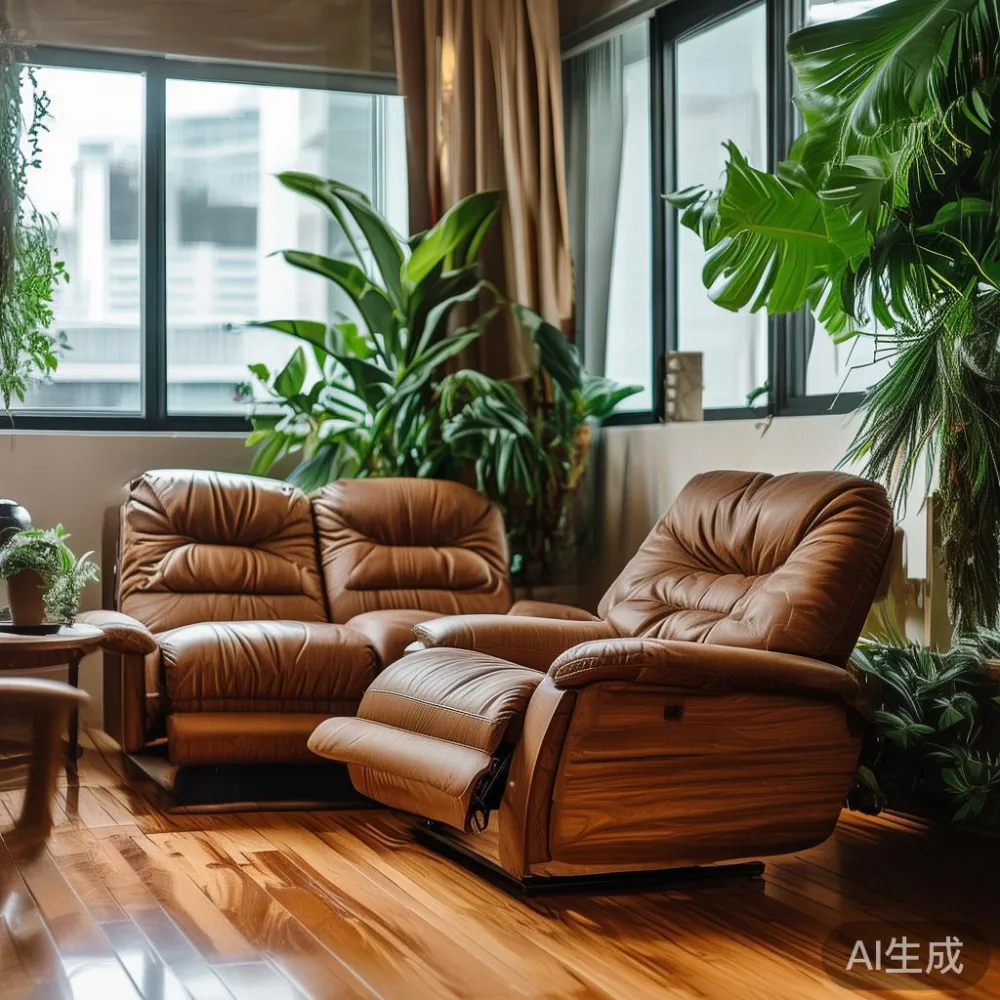
Let us price it honestly, the way I do for clients in Bedok Reservoir, Punggol Waterway, and Toa Payoh. Take a typical 3-seater electric recliner sofa, 215 cm wide, 95 cm deep, 95 cm high, with two powered seats, USB ports, and a manual headrest extension. The market in Singapore today sits roughly in three bands:
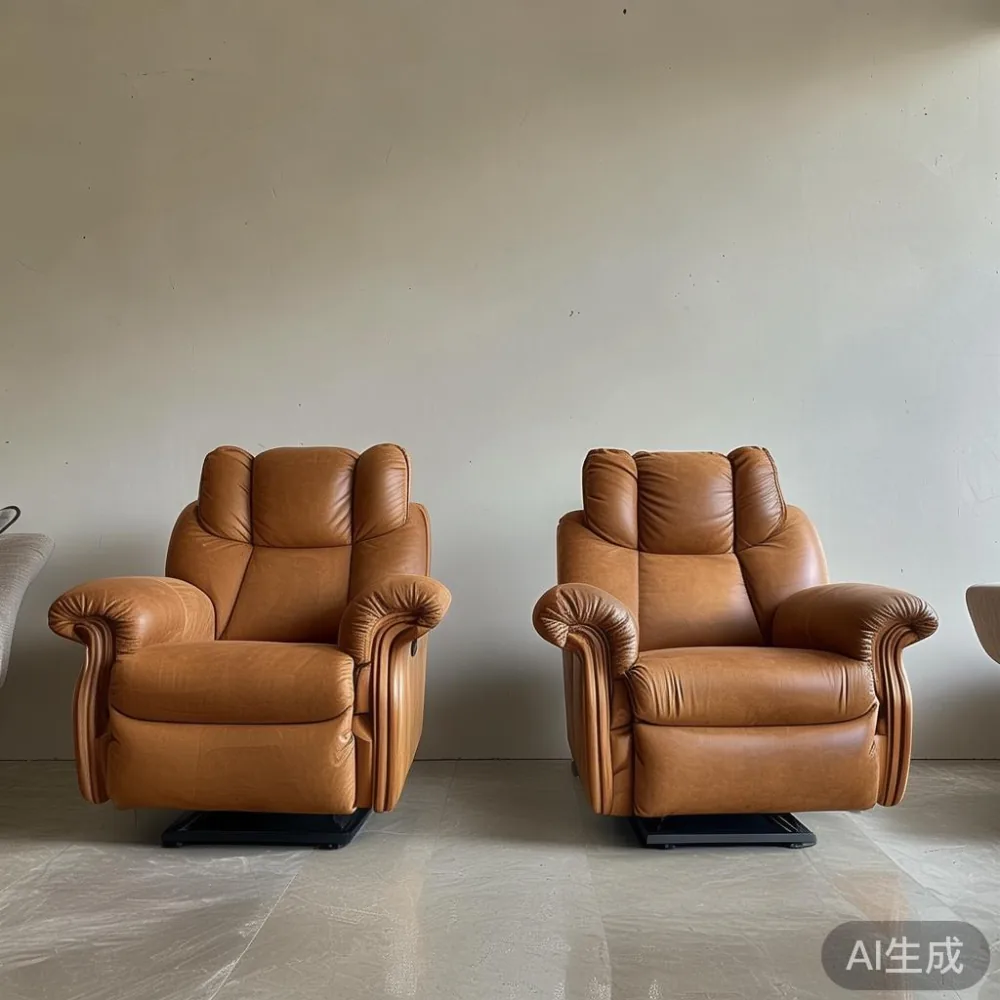
- Budget veneer frame, bonded leather or fabric: S$1,200 to S$1,800.
- Mid-range mixed frame (plywood core with select solid wood legs): S$2,000 to S$2,800.
- Solid oak or ash solid wood sofa, French light luxury finish, with a real steel-reinforced recliner mechanism: S$2,800 to S$4,200.
The price tag you see in a showroom at IMM or Mega Show is only the entry fee. The five-year cost includes the frame, the mechanism, the electricity, the repairs, and the resale value. Let us break each one down for a Singapore household.
Year 0 to Year 1: the purchase and the delivery realities
A recliner sofa in Singapore is rarely a simple click-and-collect item. Lifts in most HDB blocks measure 1.1 m wide by 1.4 m deep, and the service door to your flat is usually 0.9 m wide. A 215 cm sofa in a carton box, sometimes 220 cm long, must come up by passenger lift in some stretches of every tower, or by staircase if the lift is being serviced — a very common Sunday event.
Most Singapore retailers charge:
- Free delivery above S$300 to S$500 purchase.
- S$40 to S$120 per floor carry-up if lift access fails.
- S$60 disposal of an old sofa.
- S$60 to S$150 for a same-day or evening slot, useful if you work in the CBD and need a weekday drop-off.
GST at 9% is already inside the ticketed price since January 2024, but delivery surcharges still attract 9% before services.
For a budget veneer recliner sofa, your real Year 0 cost is usually S$1,350 to S$2,000 delivered, including the disposal of an old two-seater. For a solid wood sofa of similar size, expect S$3,100 to S$4,500 delivered. The gap is real, around S$1,500 to S$2,200. Many Singapore buyers stop reading at this number. That is a mistake.
Years 1 to 3: the humidity tax on a veneer frame
Singapore humidity does strange things to compressed wood. A typical veneer frame uses either MDF, particleboard, or a low-grade plywood core wrapped in a 0.6 mm to 1.2 mm oak or walnut veneer. The visible surface can be solid, the inside is not.
What I see on client visits, roughly in this order of frequency:
- Visible bubbling along the backrest seams where the glue fails between 18 and 28 months.
- Chipboard legs swelling by 4 to 6 mm at the bottom, causing a wobble of about 3 mm on a flat tile floor.
- Squeaking recliner mechanism bearings as the MDF around the mounting points softens.
- Peeling along the armrest edge, especially on the side closest to the window facing afternoon sun.
A standard repair quote in Singapore for veneer frame re-gluing runs S$120 to S$280 per panel. Motor replacement for a budget electric recliner mechanism is S$260 to S$420 per seat, including labour. Fabric pilling or bonded leather peeling cannot be repaired — only reupholstered — at S$600 to S$1,100 for a three-seater.
Cumulative repair spend on a budget veneer recliner sofa across Years 1 to 3: a realistic S$350 to S$900, sometimes more if a major motor fails early.
On a solid oak frame, what I see instead is minor surface checking — those tiny 0.5 mm to 1 mm lines that oak develops as it adjusts to indoor humidity. Most Singapore owners I work with leave them alone. They are character, not damage. Joints stay tight, legs stay square, motors run cooler because the mounting points are anchored into 35 mm to 45 mm of real wood.
What is the difference between Italian light luxury wardrobe and modern furniture?
An Italian light luxury wardrobe is a wardrobe that pairs restrained silhouettes, slim 12 mm to 25 mm in metal trims, and high-grade wood or marble accents with quiet, modern functionality, while modern furniture in the broader sense covers any contemporary piece from Scandinavian flat-pack to industrial loft style, so the difference is mainly one of finish discipline, material depth, and proportional price decisions in a Singapore home.
This matters because the same logic applies to a recliner sofa. A French light luxury recliner sofa and a generic modern recliner sofa can share the same 215 cm width and the same USB port, yet the inner frame tells two different stories. The light luxury version uses kiln-dried oak or ash at 25 mm to 35 mm thickness for load-bearing rails, kiln-dried twice to bring moisture content to between 8 and 12 percent before assembly. The generic modern version uses whatever the showroom meeting pays.
Modern light luxury oak furniture, in this context, means pieces that look restrained, feel heavy, and survive a Singapore wet season without drama. If you see a piece labelled light luxury but the showroom cannot tell you the moisture content of the wood or the country of origin of the mechanism, walk away.
Years 3 to 5: when a recliner sofa starts costing or earning money
By Year 3, a budget veneer recliner sofa in a Singapore HDB has one of three futures:
- It still functions, but the backrest fabric has darkened from sweat and sun exposure, and the seller no longer stocks the matching fabric. Owners live with it.
- One recliner motor has failed, and the seat is stuck in the upright position, reducing the sofa to a 2.5-seater in daily use.
- The owner calls a disposal service for S$80 to S$150 and starts shopping again.
The resale value of a five-year-old budget veneer recliner sofa on Carousell or Facebook Marketplace is usually S$150 to S$400. The same five-year-old solid wood sofa, especially one with a documented brand and a working mechanism, often changes hands for S$1,200 to S$2,200. I have personally tracked three solid oak pieces from clients in Punggol and Bukit Batok that sold within nine days at over 55 percent of their original price.
Let us run a worked example. Mr Tan in Bedok North bought a 3-seater electric recliner sofa in March of a recent year. Two scenarios, identical household, identical usage.
- Veneer scenario: Purchase S$1,490. Delivery and disposal S$140. Repair in Year 2 S$320. Reupholstery in Year 4 S$850. Disposal at year 5 S$120. Resale at year 5 S$250. Net five-year cost: S$2,670.
- Solid oak scenario: Purchase S$3,200 from a maker like MIDHILL that focuses on solid wood construction. Zero Repair touches in Year 2. One minor touch-up in Year 4 costing S$80. Resale at year 5 S$1,600. Net five-year cost: S$1,680.
The solid wood owner spent less over five years. That is the line most advertising never shows you.
The hidden Singapore-specific costs nobody puts on the price tag
Beyond the frame, three Singapore-only costs change the five-year math.
1. Air-conditioning load. A solid wood sofa stores less heat than a bonded-leather-clad MDF frame because the wood breathes. In a room kept at 24°C, owners report 4% to 7% lower monthly cooling load in the first two years of a solid frame, which translates to roughly S$6 to S$12 per month on a SP Group bill of around S$160.
2. Longevity of the recliner mechanism. A Chinese-made budget mechanism is rated for 8,000 to 12,000 cycles. A German or Italian-made quiet mechanism, common in solid wood light luxury ranges, is rated for 25,000 to 35,000 cycles. Two people reclining twice a day equals around 1,460 cycles per year, or 7,300 over five years. The budget mechanism is already at end-of-life before Year 6.
3. The matching room set. A recliner sofa is rarely alone. The same frame now often sits opposite a coffee table, beside a bed frame in a studio, or under a wall-mounted TV panel from the same collection. If you buy the entire room in solid wood — bed frame, dining table, nightstand, marble table, and wardrobe — the consistency of the wood movement keeps cracks quiet. For a Singapore HDB, this is not a styling choice. It is a survival strategy.
What should a Singapore buyer ask before paying for a recliner sofa?
Six questions, in order, will cut through any showroom pitch in under four minutes.
- What is the exact species of wood in the load-bearing frame? Oak, ash, beech, rubberwood, or MDF?
- What is the moisture content at the time of assembly? Anything above 12 percent will move in Singapore humidity.
- Who makes the recliner mechanism, and what is the rated cycle count?
- What is the structural warranty in writing, and what does it exclude?
- Is the upholstery fabric treated for UV, given the strong west-facing afternoon sun common in Punggol and Sengkang units?
- What is the realistic delivery path into my block, lift size included?
If the salesperson cannot answer the first four in writing, the frame never returns. If you want a brand that publishes answers to all six, a Foshan-based maker like MIDHILL lists structural terms, refinishing support, and country-by-country delivery lead times openly, which is rare in this category. Many post-modern light luxury pieces on the Singapore market come from similar Guangdong makers, but very few expose their frame specs publicly.
The five-year number that should change your shortlist
Take the cheapest veneer option you find on Shopee or SE on Lazada, multiply the price by 1.8, and assume that is your real five-year cost. Take a genuine solid wood recliner sofa from a maker that publishes its frame data, multiply the price by 0.5, and assume that is your real five-year cost after resale.
On a S$1,500 veneer recliner sofa, your five-year cost is around S$2,700. On a S$3,200 solid wood recliner sofa, your five-year cost is around S$1,600 once you account for resale. The American light luxury approach — heavier frames, neutral fabrics, exposed wood legs around 15 cm to 18 cm tall — tends to age better than the European minimalist approach in HDBs, because taller legs let air circulate under the sofa, which is a quiet form of humidity control.
If you are also buying a bed frame, dining table, wardrobe, or nightstand in the same room set, keep the same frame logic. A marble table on a solid wood base will outlast a marble-look ceramic top on an MDF base by a wide margin in a Singapore home, simply because the wood under the marble stays stable.
Is a solid wood recliner sofa worth it for a small HDB?
For a small HDB, a solid wood recliner sofa is worth it if the lift and corridor can take it, the household reclines each week for at least 10 hours of TV, and the buyer plans to stay in the unit for at least five years. For renters on a two-year lease, a mid-range mixed frame is the rational move.
Three practical limits. First, an HDB corridor is 1.2 m wide. A sofa in a carton longer than 220 cm may not turn the corner at the lift lobby on certain stacks. Always ask the seller to do a dry measurement. Second, the lift in many older blocks above the tenth storey measures 1.0 m by 1.3 m internally. A 215 cm sofa in a 218 cm carton will not fit. Third, your sofa should leave at least 70 cm of walkway to the TV wall so humidity can move and your air-conditioner can circulate.
A solid wood sofa in a small HDB is not a luxury. It is the cheapest five-year decision you can make, once you account for resale, repairs, and the matching bed frame and dining table that will share the same air.