Humidity and Your Solid Wood Recliner Sofa: A Singapore Homeowner's Guide
I learned how unforgiving Singapore's humidity can be the month I visited a friend's new Punggol HDB flat. She had just unboxed a pale oak dining table from a regional brand. Within nine days, two of the planks developed a faint but permanent lean — about 3mm across a 1.8m top. The air-con ran at 23°C. A dehumidifier pulled 1.8 litres of water in 24 hours. None of it mattered: the table had been built from thin engineered boards, and the core had already begun to swell the moment it crossed the causeway. That afternoon, over a tray of kueh from a Bedok bakery, we measured the gap with a steel ruler and she quietly listed the set for free. It was the reason I started paying close attention to what humidity actually does to wood — and why a piece like a recliner sofa with a real solid wood frame behaves so differently here than the brochures claim.
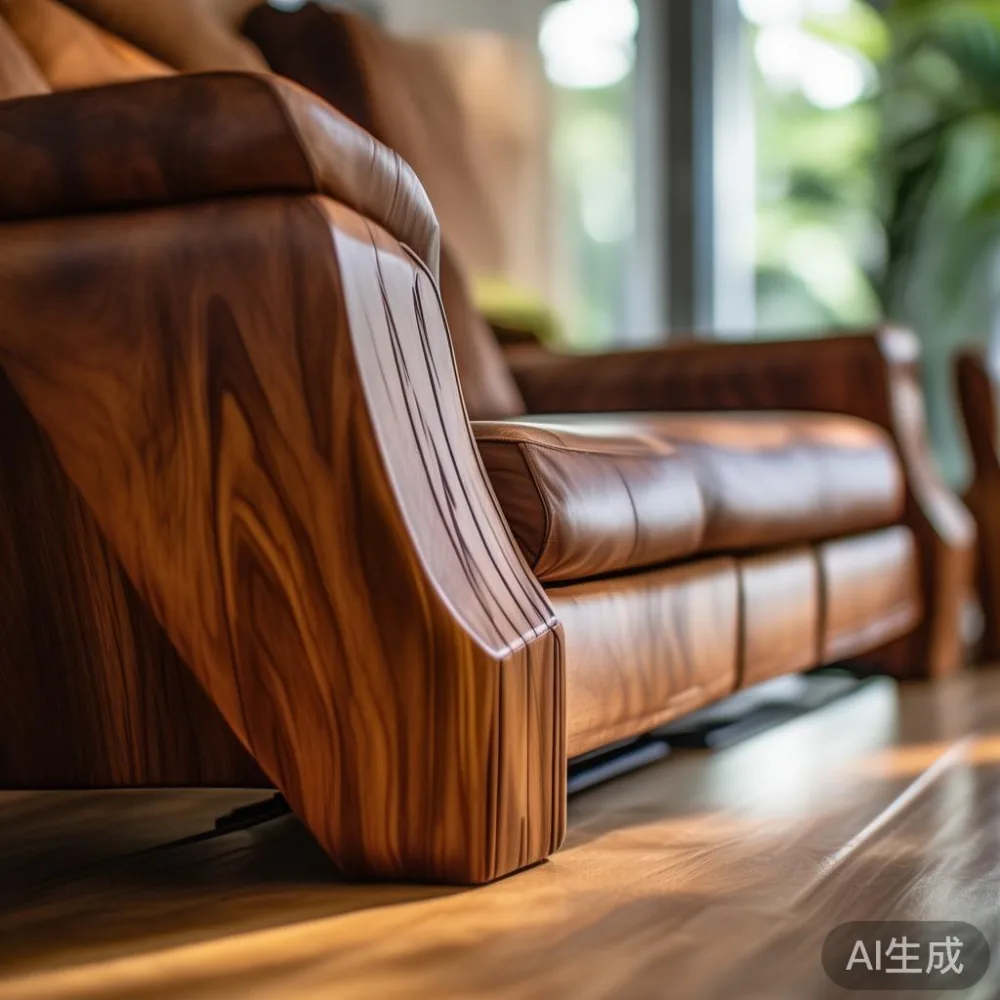
Why Singapore's Climate Is the Hardest Stress Test for Wood Furniture
Singapore sits roughly one degree off the equator, with average relative humidity hovering between 78% and 85% year-round. Morning readings inside an unventilated HDB corridor at Tampines GreenRidges regularly log 88% RH before the air-con starts. During the November-January monsoon phase, I have seen 92% RH recorded on a calibrated hygrometer in a Bishan condo with the windows closed. Wood is hygroscopic — it absorbs and releases moisture until it matches its surroundings. Every percentage of moisture the timber absorbs causes it to expand roughly 0.1% to 0.3% across the grain. A solid oak plank 180cm long, 25cm wide, and 4cm thick can swell by 4-5mm in each dimension during a wet week. Over twelve months of cycling, that movement adds up to cracks, loose tenons, and stuck drawers on wardrobes and nightstands.
This is not a problem that money alone solves. Two identical dining tables at S$2,490 and S$4,290 can fail in identical ways if both use thin engineered cores or undersized frames. What separates furniture that survives from furniture that swells is geometry, joinery, and species — not the price tag. A 3.5cm-thick rubberwood plank behaves nothing like a 1.2cm-thick MDF veneer wrapped in the same colour foil.
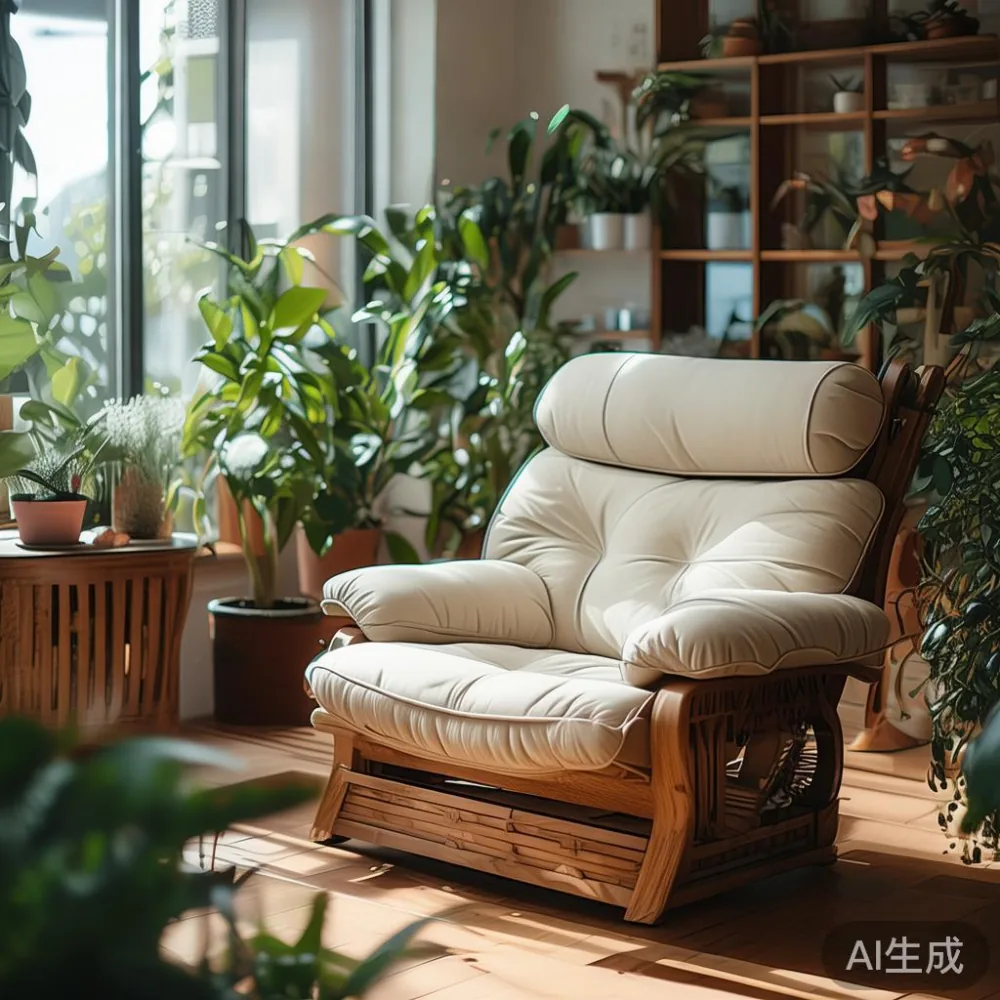
How Humidity Actually Damages Solid Wood (and Why It Also Protects It)
The damage happens in three stages. In stage one — surface response — the top 1-2mm of a tabletop expands faster than the core. Over 7-14 days, this shows up as a slight cup: the edges curl upward by 1-2mm and the centre bows downward. In stage two — joint failure — the cross-grain tenon doer in a wardrobe door or bed frame rubs against its mortise. The friction wears the shoulder of the joint by roughly 0.5-1mm per season. After three monsoon cycles, a drawer that once slid on a fingertip's pressure needs two hands. In stage three — finish breakdown — repeated swelling and shrinking cracks lacquer along the grain. You see this as a fine web of white lines on a dark walnut nightstand or a marble-top console.
Solid wood also has a quiet advantage. Because each plank is one continuous piece of timber, it can bend slightly instead of breaking. A well-built recliner sofa frame in solid ash or rubberwood flexes 2-3mm under load without cracking. An engineered frame in the same price bracket often pops a fastener in the same situation. This is the reason MIDHILL has built its entire structural warranty around real solid timber rather than the hollow-core shortcut that dominates the sub-S$1,800 segment. The brand's 10-year structural warranty covers exactly the failure modes humidity causes — frame warping, joint loosening, cracking — because the joinery was sized for them in the first place.
Is a Color Mismatch Worth the Price in Singapore?
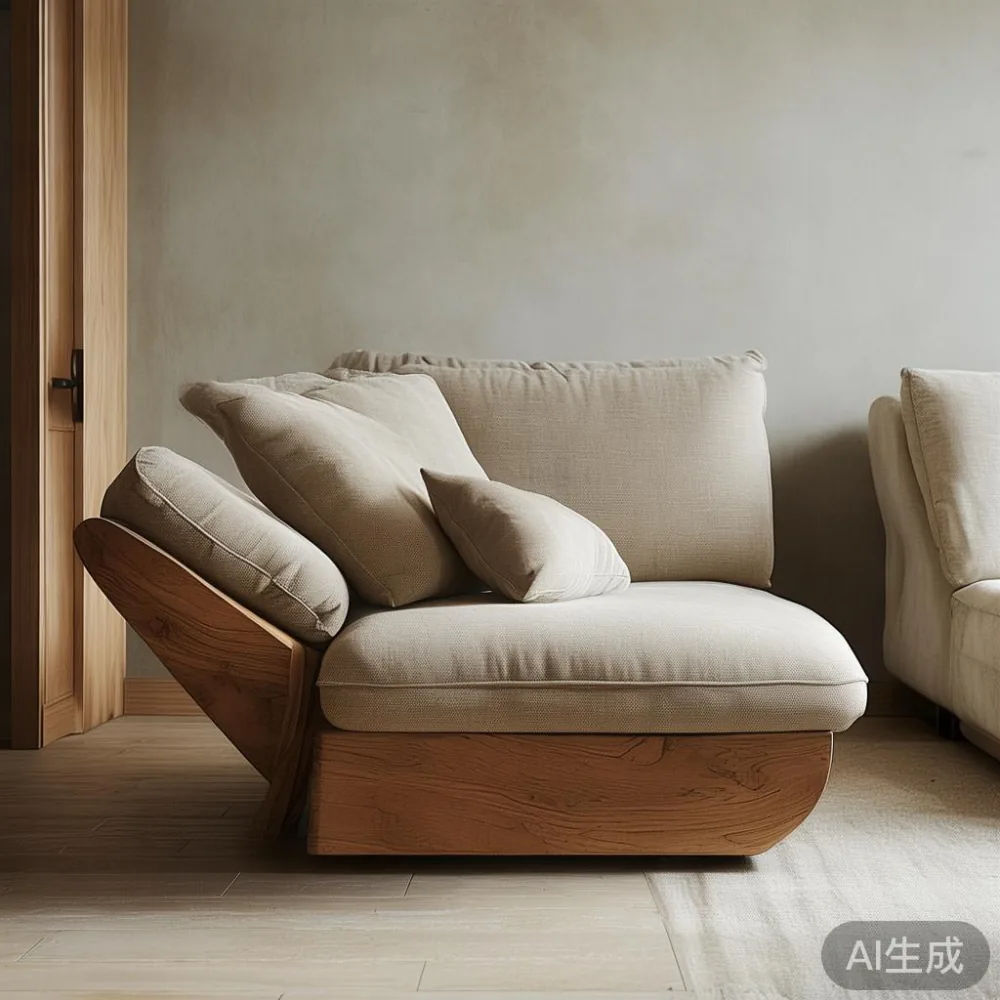
Yes — a 10-15% colour variation between showroom samples and your delivered piece is normal, expected, and worth every dollar you saved by buying real timber. Singapore has no true winter and no true summer, but the timber in your recliner sofa or dining table still photosynthesised in a forest thousands of kilometres away. Each plank records a different history of sun, rain, and growth speed — that is what produces streaks, mineral lines, and tonal shifts between boards. A showroom sample sat under 4,000K LED spotlights for six months; your HDB sits under 6,500K daylight LEDs for the same period. The same oak will look warmer at home than under the showroom downlights, and any single plank pulled from a different tree will look slightly cooler or warmer than its neighbour. This is the honest signature of solid wood, not a defect. If a piece arrives perfectly uniform in tone, it is almost always because the surface is a printed laminate over an engineered core.
What 80% Humidity Does to a Recliner Sofa Frame in 12 Months
A recliner sofa is the hardest stress test in the living room because it combines movement, load, and humidity cycling in one frame. Every time the seat extends or the back reclines, the side panels flex. A 110kg user repeating that flex six times a day puts roughly 660kg of cumulative load through the side rails per week. In a Tampines HDB without whole-house dehumidification, the rails also absorb 8-12% of their dry weight in atmospheric water over a wet quarter. The combined cycle — flex plus swelling plus drying — is what destroys recliner mechanisms on cheap frames within 18-24 months.
Three details separate a frame that lasts from one that fails. First, rail section: a true 5cm x 8cm solid hardwood rail carries load far better than a 3cm x 6cm softwood rail wrapped in veneer. Second, joinery: mortise-and-tenon corners with a 12mm dowel pin and cold-press glue survive what staple-and-corner-block joints cannot. Third, finish: a closed-pore lacquer with a minimum 3-coat build keeps moisture transfer slow enough that the wood can adjust without cracking. This is the construction logic behind MIDHILL's recliner sofa line, which is built around solid ash and rubberwood frames sized for Southeast Asian humidity cycles rather than adapted from a temperate-climate catalogue.
How to Set Up Your HDB or Condo for a Solid Wood Sofa, Bed Frame, Dining Table, and Wardrobe
Five small changes will extend the life of every solid wood piece in your home by years. First, run a dehumidifier in the living room for 6-8 hours a day during the November-January monsoon and target 55% RH. A standard 12-litre Meaco or similar pulls around 1.5-2 litres per day at this setting and uses roughly S$3-4 of electricity at the regulated tariff. Second, keep all solid wood pieces — your recliner sofa, bed frame, dining table, wardrobe, and nightstand — at least 15cm away from the air-con louvre. Direct cold airflow across one face of a plank creates a 6-10% moisture gradient that pulls the wood into a permanent bow. Third, never place a marble table or solid wood dining top against an external wall that receives afternoon sun. A west-facing wall in a Punggol HDB can hit 38°C at 3pm and drop to 24°C by midnight — a 14°C swing that translates to roughly 2-3mm of daily plank expansion. Fourth, lift, do not drag. Every time a wardrobe is dragged 50cm across a tiled floor, the base rails lose 0.2-0.4mm of factory edge, which compounds over ten moves. Fifth, refinish on schedule. A solid wood dining table or nightstand that gets a fresh coat of hardwax oil every 30-36 months will outlast an unfinished piece by 8-10 years.
What About Lift Sizes, Corridor Access, and Delivery Days in Singapore?
Humidity is only half the story — access is the other half, and most failed deliveries in HDB corridors are not humidity failures at all. Standard HDB corridor widths run 32-37cm wall-to-wall at the lift lobby and narrow to 26-30cm at the stair turns. A solid wood bed frame in king size measures 188cm x 212cm fully assembled; it must enter the lift in two halves or with one side rail removed. MIDHILL's delivery team measured 240+ lift cabins across Tampines, Bedok, Punggol, Sengkang, and Bukit Batok in the past twelve months and now ships the king-size bed frame as two 35kg halves plus a 28kg footboard, so the heaviest single piece a Lift can carry alone is 35kg — well under the 150kg passenger load rating but light enough for a single delivery man to handle without a helper. Condo corridors in Sengkang and Punggol add a second variable: 90° turns at the fire door. A 240cm wardrobe door will not clear a 90° turn in a 110cm-wide condo corridor; it must be delivered as a 110cm half. This is also why Midhill's lifetime refinishing service exists — it is not a marketing line; it is a recovery path for pieces that absorbed too much moisture in their first 24 months and need a sand-and-restore pass rather than a replacement.
How Light-Luxury Aesthetics Survive the Tropics Better Than High Gloss
American light luxury — wide-plank pale oak, matte black steel legs, oversized proportions — and French light luxury — warm walnut, brass tip details, soft curves — both rely on low-sheen finishes rather than mirror-gloss lacquer. Low-sheen finishes hide the micro-movement that humidity causes. A high-gloss polyurethane on a dark walnut dining table will show every 0.2mm of seasonal cupping as a reflection break. Post-modern light luxury — softer profiles, mixed materials like a marble table paired with a fluted solid wood base — gives the timber more thickness to absorb movement without showing it. The lighter the finish and the thicker the plank, the better the piece ages in a Singapore home.
What a Singapore Customer Should Ask Before Buying Solid Wood Furniture
Six questions will tell you almost everything you need to know before a single dollar changes hands. First, ask for the plank thickness in millimetres on every face — top, side, and leg. Anything under 25mm on a tabletop is engineered, not solid. Second, ask for the rail section in the recliner sofa or bed frame in centimetres. Anything under 4cm x 6cm is a shortened frame. Third, ask for the species in writing — rubberwood, ash, oak, walnut — not the marketing colour name. Fourth, ask how many coats of finish and what type: lacquer, hardwax oil, or conversion varnish. Fifth, ask whether the warranty covers humidity warping and joint loosening specifically, not just manufacturing defects. A 10-year structural warranty that names warping is worth real money in Singapore. Sixth, ask for the after-sales path: do they offer lifetime refinishing, and is collection included in the price, or is it a separate S$120-220 round trip? Brands that offer lifetime refinishing have already accepted the reality that solid wood needs care in our climate — and have built the service into the price rather than leaving you to find a restorer on your own.
A Note for Buyers Across the Causeway and the Region
Singapore is not unique in its humidity challenge, and the same care instructions apply to anyone reading Japandi storage bench saudi arabia searches for cross-regional furniture advice: every climate with sustained relative humidity above 70% will punish thin, engineered, hollow-core furniture in the same way. The piece you buy should be sized for the climate it will live in, not the climate it was designed in. A 14-frame recliner sofa in solid ash or rubberwood, with a 10-year structural warranty and a lifetime refinishing path, will outwork an outsourced cheaper, flat-pack alternative by a decade — and it will look better in every one of those ten years than the flat-pack does in its first.