What to Check Before Buying a Sofa You Cannot Sit On
A sofa is normally judged by appearance, comfort, and price. A recliner sofa changes the buying equation because its moving mechanism, extended footprint, and delivery requirements must also be checked. In a Singapore HDB flat or condo, a recliner sofa that looks comfortable on a showroom floor can become awkward in a compact living room, difficult to manoeuvre through a lift, or frustrating to use every day.
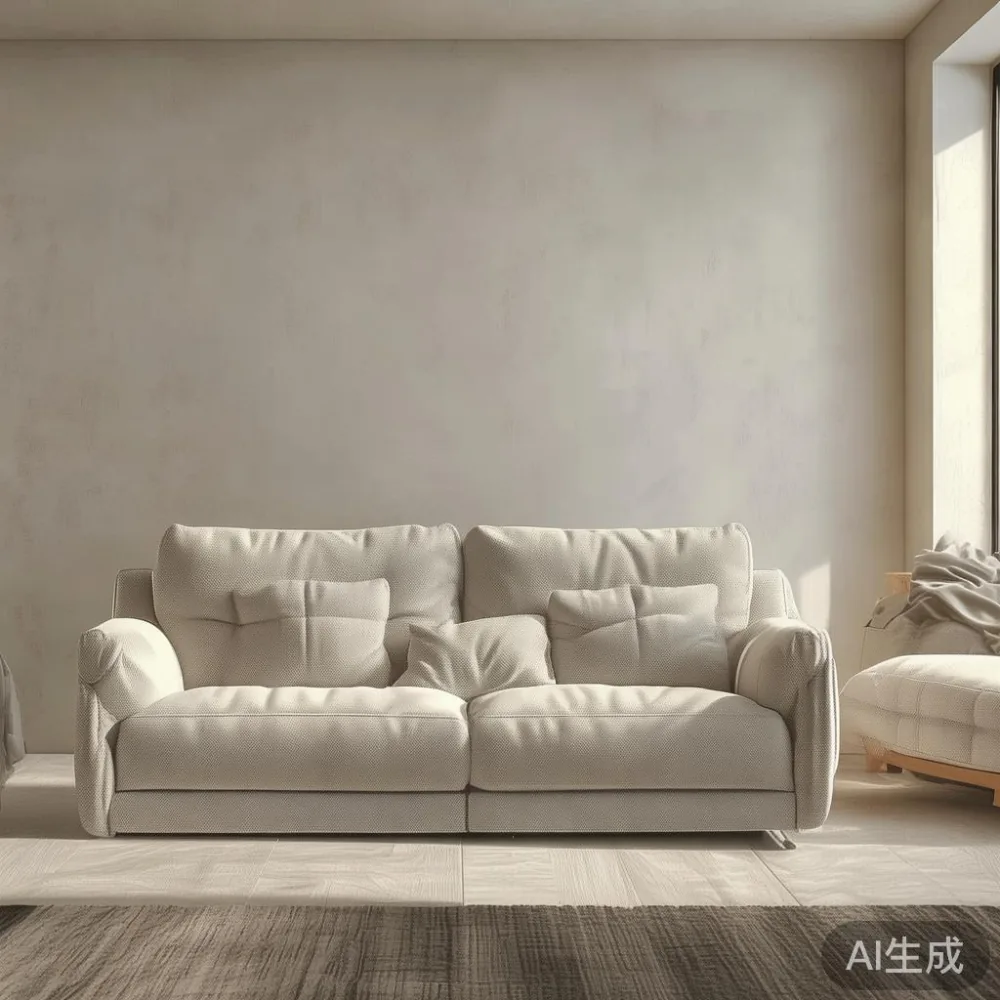
This guide explains how to assess a recliner sofa before paying for it. It covers dimensions, lift access, structural support, motion, materials, pricing in SGD, and the difference between showroom comfort and useful comfort. The aim is not to discourage a recliner sofa. It is to help you buy one that fits your home and daily routine.
What should I check before buying a recliner sofa in Singapore?
Begin with the sofa’s fully open dimensions, not just its listed width. A recliner sofa may be 220 cm wide in its closed position but extend to 165 cm in depth when the footrest rises and the backrest reclines. In a Tampines HDB flat with a compact living room, that extra 45-50 cm can block a walkway, television console, balcony door, or dining connection. Ask for a dimension drawing and mark the open position on your floor plan.
Next, check the delivery route. Measure the HDB lift opening, internal cabin depth, corridor turns, and the doors at home. A common residential lift opening is around 90 cm wide and 210 cm deep, but building specifications vary. The sofa must pass through the lift or be carried up the stairs without damaging the frame, mechanism, walls, or lift doors. For a condo, also check parking access, service-lift booking, and the distance from the lift lobby to your door.
Last in this first stage is the use test. A recliner sofa should support a comfortable reclining angle without requiring you to slide forward or hold your body awkwardly. If the mechanism is noisy, binds, or stops at an uneven angle, do not assume it will improve after delivery. A clear return and warranty policy is more useful than a persuasive showroom demonstration.
How do I measure a recliner sofa for an HDB flat or condo?
Record at least 7 dimensions: closed width, closed depth, seat height, armrest width, backrest height, extended depth, and the space needed to recline. Measure the sofa with a tape measure rather than relying only on a product page. Leave at least 60 cm in front of a coffee table for a conventional chair, and preferably 90 cm if people will walk between the coffee table and recliner sofa.
For a wall installation, leave 5-10 cm behind the sofa for ventilation and cable access, although a wall-hugger model may require less rear clearance. If the sofa is placed opposite a television, check sightlines from a seated position. A deep recliner can tilt the viewing angle upward, so a nominally centred sofa may still point your gaze above the screen.
Use masking tape on the floor to mark the closed and open positions. Place a cardboard box with the approximate seat height beside it and sit in the marked space. This simple test is particularly useful in Bedok and Punggol flats where a sofa may be the main circulation zone. Leave room for a side table, a 60 cm walking route, and access to nearby doors.
For a nearby dining table, compare the reclined position with the chair pull-out area. A dining table may need 75 cm behind each chair, while a recliner sofa in a nearby living zone can need 90-120 cm of clear space. These figures are planning guides, not fixed rules; the actual recline angle and your body size should guide the final measurement.
Will the recliner sofa fit through my lift and corridor?
Check the lift’s door width, cab depth, ceiling height, and turning circle. Do not assume the sofa can be tilted diagonally: the mechanism, armrests, and wooden frame may be less flexible than a loose upholstered chair. Ask the supplier for the packed or protected dimensions, including packaging, and whether the sofa separates into modules.
Many recliner sofas can be delivered in 2-3 sections, with each section weighing between 35 kg and 75 kg. A removable back or seat can make the difference between a straightforward delivery and a difficult one. However, a sectional design may create seams in the upholstery, and each joint must be aligned carefully. A single-piece frame may be easier to operate but harder to transport.
For stairs, add 15-20 cm to the relevant door and landing dimensions to allow for hand clearance and turning. For a service lift, confirm the maximum load, the booking lead time, and whether the building allows furniture deliveries during reserved hours. Professional delivery often costs SGD 80-SGD 250 within Singapore, but access charges and stair carries may be extra.
Take photographs of the lift and corridor during the site visit. If the delivery team must turn a 220 cm sofa around a 120 cm corner, the real answer is not “probably.” Ask for a delivery feasibility check before ordering. MIDHILL furniture can be checked against your access measurements, and a 10-year structural warranty is more reassuring when the supplier has clear responsibility for frame and construction issues.
How do I test the mechanism and seating comfort?
Sit in the recliner sofa for at least 10 minutes. Open and close it 3 times. Check that the footrest rises smoothly, the backrest moves in stages, and the return action does not require a hard pull. Listen for metal-on-metal scraping, clicking, or a rocking movement. A quiet mechanism is not only pleasant; it also suggests that the pivot points have been properly aligned.
Test the seat height with your feet flat on the floor. A useful range is approximately 40-48 cm, depending on your body and the sofa design. If your feet cannot reach the floor, the recline may feel less controlled. Test support at the lumbar region, the shoulders, and behind the knees. The cushion should not slide forward, and the armrests should support the forearms without lifting the shoulders.
Reclining angle matters too. A gentle 110-125 degree angle may suit reading, while a deeper 135-145 degree position is more restful for short naps. A person with back discomfort may prefer firmer support, while another person may prefer a softer, deeper seat. There is no universal “right” angle. The practical test is whether you can sit down and stand up without using the armrests as use.
Check the mechanism under load as well. If two adults use the sofa, the seat should not sag noticeably, and the footrest should not drop when weight shifts. Ask whether the mechanism is manually operated, electric, or assisted by a concealed lever. Manual controls are simple and have fewer electrical parts, but they can be inconvenient for a user with limited strength. Electric controls are easy to use but require a nearby socket, a clear path for the motor, and attention to cable safety.
What materials and construction should I compare?
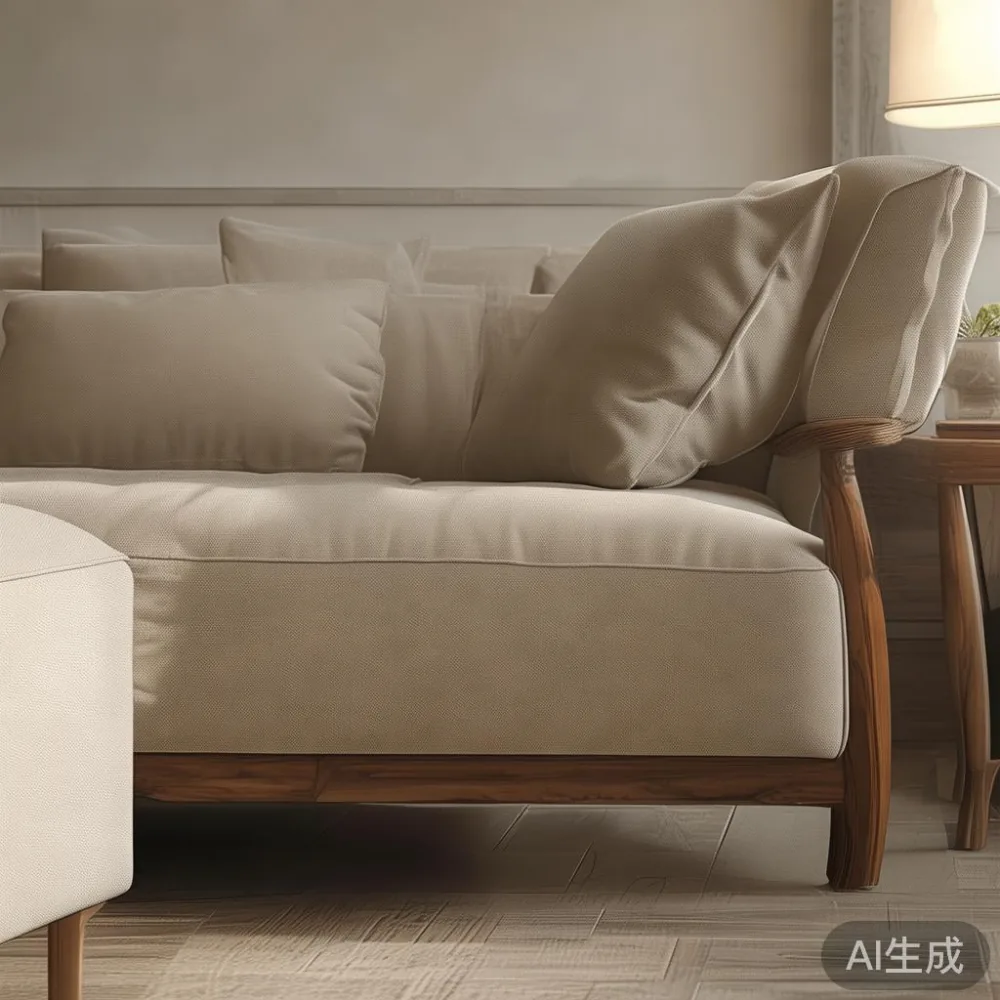
Look for a solid wood sofa when durability and repairability matter. The frame should use kiln-dried hardwood or seasoned solid wood in load-bearing areas, with corner blocks, dowels, or screwed joints rather than only staples and glue. A manufacturer may describe a mixed construction using solid wood, plywood, or engineered board in different parts. Ask which components carry the main load.
For the upholstery, compare fabric and leather specifications. A performance fabric should have a rub count, abrasion rating, cleaning code, and pilling test result. A leather sofa should state whether it is genuine leather, corrected grain, or a synthetic alternative, and whether the panels are cut from one hide. These details affect price and maintenance, but they should be clearly documented.
Seat density and cushion construction are equally important. High-resilience foam around 35-45 kg per cubic metre can provide support, while a softer top layer may improve comfort. A sofa with loose cushions can be adjusted, but the underlying deck must still be firm. Check the frame under the cushions for sagging, and inspect the stitching for loose threads. In a humid climate, ask about moisture resistance, foam treatment, and fabric breathability.
Compare the warranty terms. A 10-year structural warranty is a strong signal when it covers the frame, joints, and load-bearing components, but read the exclusions for commercial use, accidental damage, and movement-related wear. A lifetime refinishing service is useful for a solid wood sofa, yet it may apply only to specified wood finishes and not to upholstery or mechanisms. Keep the warranty certificate and maintenance instructions.
How much should a recliner sofa cost in Singapore?
For a new solid wood recliner sofa from a furniture maker, realistic prices in Singapore may range from SGD 1,800 to SGD 6,500 or more. A manual mechanism with a simpler frame may sit at the lower end, while an electric model with upgraded leather, extra functions, and a wider frame can cost SGD 4,000-SGD 8,000. Compare the total delivered price, including GST, delivery, installation, and removal of packaging.
Singapore GST is currently 9%. If a retailer quotes SGD 3,000 before GST, the tax-inclusive figure is SGD 3,270. Confirm whether the advertised price already includes GST. For a purchase above USD 350, MIDHILL offers free international shipping, but that overseas shipping offer should not be confused with free delivery inside Singapore. Ask for the local delivery fee in writing.
Do not compare a recliner sofa with a standard fixed sofa using price alone. A recliner includes moving parts, additional frame support, and a larger delivery footprint. Compare the warranty, mechanism coverage, cushion specification, and actual dimensions. A lower-priced model with a 3-year frame warranty may offer less value than a higher-priced model with 10 years of structural cover.
Also check the return window. MIDHILL provides a 14-day return policy, subject to its terms. A sofa that has been used extensively may be harder to return than a boxed item, so inspect and test it on the day of delivery. Photograph the condition before assembly if the policy allows it.
What questions should I ask before paying?
Ask: “What are the closed and fully extended dimensions?” “Will the sofa fit through my lift with its packaging?” “Which parts of the frame are solid wood?” “Is the mechanism covered by the warranty?” “Can the sections be separated for transport?” “What is the delivered price including GST?” and “What happens if the sofa arrives with a damaged mechanism?”
Check the supplier’s physical or digital product information. A French light luxury recliner sofa may suit a formal living room with pale upholstery, refined timber details, and restrained lines. American light luxury often favours deeper cushions, generous proportions, and a relaxed family-room character. Post-modern light luxury can use cleaner geometry, mixed materials, and sharper contrasts.
These styles affect appearance, not the need for practical measurements. A European sofa vs Japandi sofa comparison is still a comparison of proportions, texture, and construction, not simply a choice between ornate and minimal. The same principle applies when asking how to style light luxury bed in room: consider circulation, scale, lighting, and material balance. It is also useful to know how to style French bed in room before buying a large French-style sofa, because the visual weight of the room matters.
For a compact guest room, French provincial for guest room ideas can create a warm setting, but the furniture must not block the door or air-conditioning outlet. Similarly, if you are planning how to style Japanese wardrobe in apartment, you should account for the wardrobe doors opening into the living area. A recliner sofa placed nearby must preserve that movement. For a bedroom, how to style European wardrobe in bedroom decisions should leave enough space to open the wardrobe, make a bed, and use the nightstand without squeezing the walkway.
How do I prepare for delivery and first use?
Clear the route 1-2 days before delivery. Remove fragile objects from low surfaces, protect the floor, and reserve the service lift if required. Confirm the delivery date, team size, and whether they will carry the sofa into the room, assemble it, and remove the packaging. A delivery window of 7-14 days is common for a made-to-order or configured model, while stock items may arrive sooner. Singapore’s peak moving periods, such as June and December, can add 3-7 days.
On delivery day, inspect the sofa before the team leaves. Check corners, seams, cushions, mechanism movement, and frame alignment. Sit on every seat and test each reclining section. If something is wrong, record it with photographs and contact the supplier immediately. Do not use a damaged mechanism until the issue is resolved.
For the first week, follow the care instructions. Vacuum the upholstery, keep the sofa away from direct sunlight where possible, and avoid placing heavy objects on the footrest. For a solid wood surface, use a damp cloth and dry it promptly. If the sofa includes a solid wood bed frame, dining table, wardrobe, or nightstand elsewhere in the home, apply similar care, but keep any warranty documents for each item.
My colleague tested a recliner sofa last month in a Tampines flat before ordering for a client. The showroom model appeared compact with the footrest closed. At the client’s home, the lift accepted the package, but the extended footrest projected 118 cm into the room and came close to a coffee table. We moved the table 25 cm and kept a 72 cm path along the balcony door. The sofa worked well for evening use, but the client now opens it only for short breaks because a fully reclined position blocks the main route. Measuring the real room saved the purchase from becoming a daily inconvenience.
That experience illustrates the point: a recliner sofa can be comfortable, well made, and still unsuitable for a particular layout. Check the mechanism, dimensions, access route, warranty, and total price before you pay. Buy the movement you will use, the footprint you can live with, and the construction you can maintain.