Solid Wood Furniture Price Drivers Explained
I spent last Saturday walking through a Tampines furniture showroom with a colleague who had just collected keys to a 990 sq ft Punggol BTO. She kept pointing at a S$2,400 solid wood sofa and asking the salesperson, "Why is this one S$2,400 and the one across the aisle is S$1,100? They both look brown." That conversation, multiplied across a thousand conversations every weekend in Bedok, Sengkang, and Toa Payoh, is exactly why I wanted to write this. The price gap between a cheap piece and a properly built one comes down to a handful of specific, measurable factors — not brand magic, not vague "quality."
How much of the price is actually the wood?
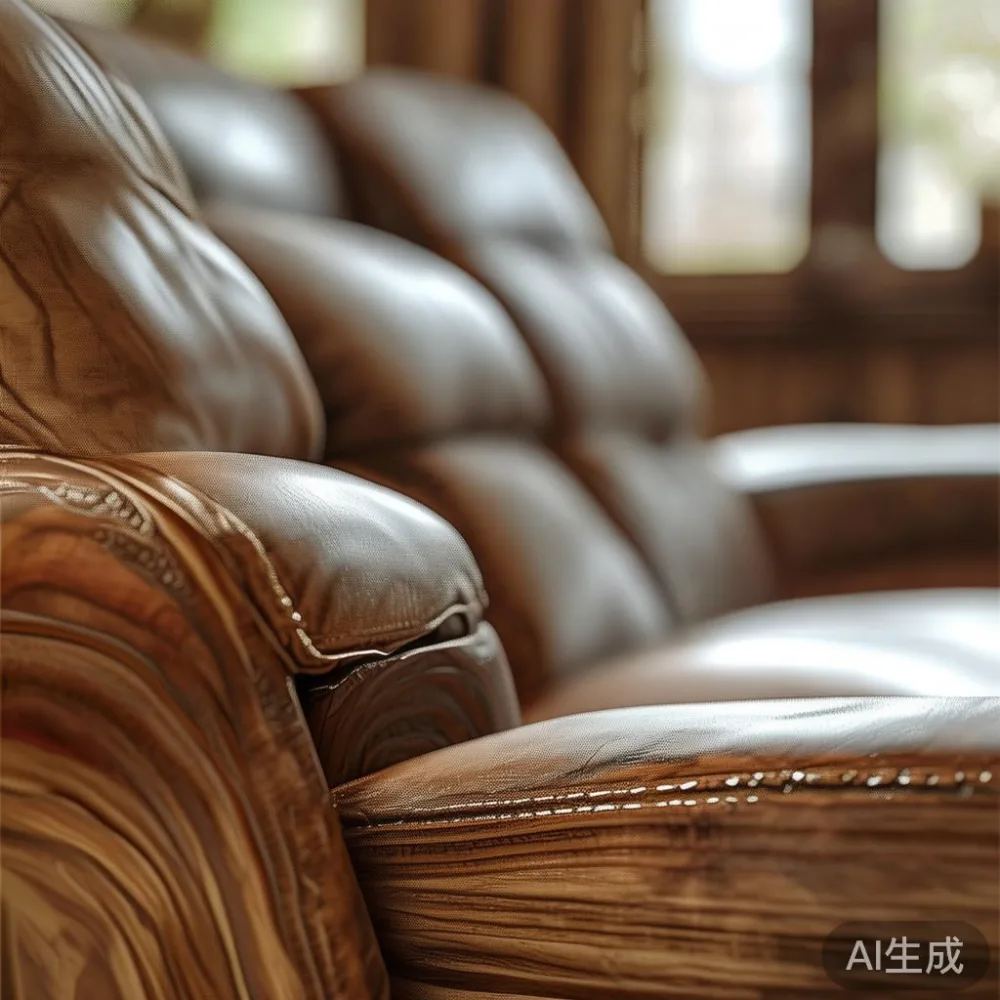
Usually less than buyers expect. In a typical solid wood sofa or bed frame, raw timber accounts for roughly 25–40% of the factory cost at a Chinese-origin workshop. For a Foshan factory producing in volume, kiln-dried ash or walnut boards run about S$9–S$18 per board-foot before CNC cutting, while rubberwood, the workhorse of entry-level sets, lands closer to S$3–S$5 per board-foot. That gap explains part of the S$1,300 spread my colleague saw, but not all of it. The rest hides in joinery, finishing, hardware, and how much the maker sweats the components you never see.
A 200 cm three-seater built around rubberwood core with ash veneer faces will retail around S$1,600–S$2,200 in Singapore. The same dimensions in solid walnut from a maker like MIDHILL push toward S$3,400–S$4,200 depending on upholstery and recliner mechanism. Wood is the headline, but not the whole story.
Why does joinery matter more than people think?
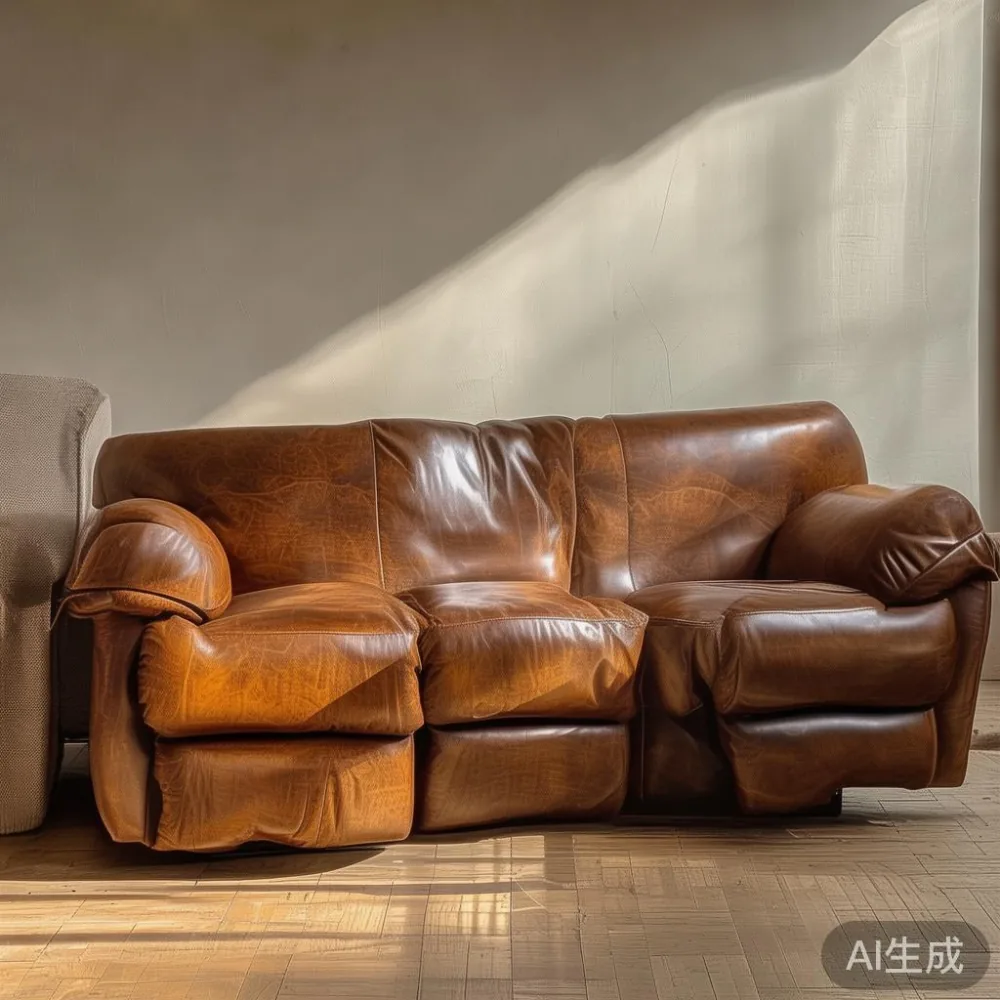
Mortise-and-tenon, dovetail, finger joint, dowel, pocket screw, staple — each one costs a different amount of factory time. A skilled Foshan joiner can cut 25–30 mortise-and-tenon pairs per day on a single woodworking line; that same joiner can hammer out 200 pocket-screwed carcasses before lunch. The hourly wage difference is small, but the per-piece time difference is enormous, and it shows up in your invoice ten months later when a wobbly recliner sofa starts creaking every time your partner sits down.
This is also why a 180 cm dining table in solid oak with hand-cut tenons can weigh 85 kg at delivery — your corridor width matters here. Most HDB corridors run 1.2 m to 1.5 m; a heavy table carried by two delivery men needs at least 0.9 m of turning radius at your unit door. I watched a Bedok team last month wrestle a 92 kg marble table through a 1.1 m corridor, and the door frame took a small chunk out of the plaster. That is not a wood problem; that is a planning problem made worse by the piece being heavier than it needed to be because the frame was built right.
What are you paying for when you pay for "finishing"?
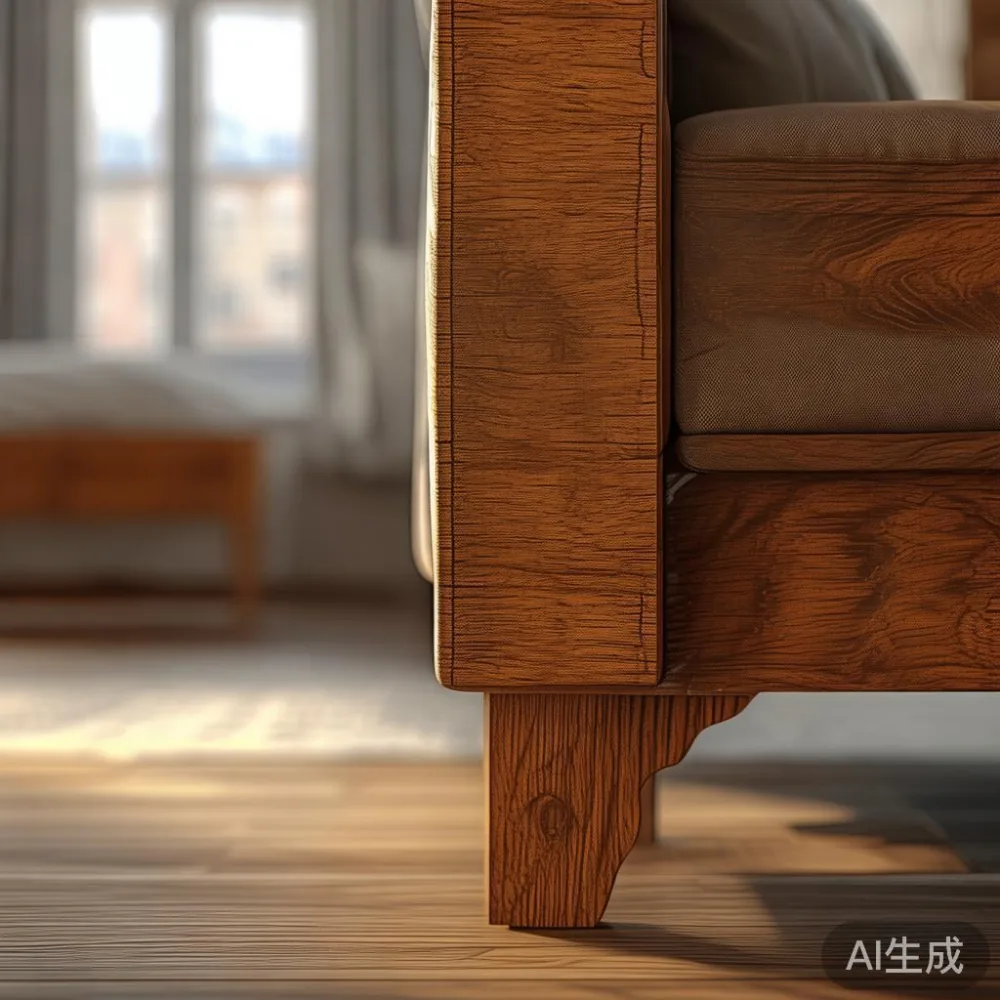
A lot, frankly. The finish is what you touch every day, and cheap finishing is the single fastest way to make a solid wood bed frame or wardrobe look tired within 18 months. A conversion varnish sprayed in five coats on a flat-line finishing line costs the factory roughly S$0.40–S$0.70 per square foot of surface. A hand-applied oil-and-wax finish costs more in labour but less in material; a French light luxury style with a subtle wire-brushed satin sheen lands somewhere between, around S$0.80–S$1.20 per square foot. Multiplied across the surfaces of a 220 cm wardrobe, that swing is S$180–S$260 — money you do see in the showroom ticket.
Sealer quality matters more than topcoat marketing. A wardrobe sealed with a 2K polyurethane and finished in acrylic will handle a non-aircon storeroom in a Yishun walk-up for 15+ years without warping. A wardrobe finished in single-pack NC lacquer over the same wood may cup at the shelves within 30 months if the humidity swings. Singapore sits at 70–85% relative humidity nine months a year, and your furniture lives or dies by how well the finishing slows moisture exchange.
How does the category of piece change the maths?
A recliner sofa carries extra hardware and motion cost that a fixed-frame sofa does not. A three-seater manual recliner adds S$220–S$380 in steel mechanism cost and S$80–S$140 in extra upholstery work over its stationary sibling, which is why a S$2,800 recliner sofa next to a S$2,200 fixed-frame sofa of the same wood spec is not actually marking up the customer; it costs more to build. If you are looking for the best Japandi sofa for 2026 and leaning toward a recliner style, budget at least S$2,900–S$3,600 for honest construction in solid ash or walnut, and assume the lower end of the range has compromised somewhere to hit it.
A bed frame, especially anything billed as a European bed vs French provincial bed comparison shopper, swings on headboard complexity and slat system. A plain platform bed with 12 birch slats costs S$850–S$1,400 in solid rubberwood. The same bed with a tufted linen headboard and a hydraulic lift for under-bed storage climbs to S$1,900–S$2,800, and that is before you cross-shop a sleeper sofa — if you want an honest european sofa bed with storage, expect S$2,200–S$3,500 from a Foshan factory delivering direct, because the storage compartment adds steel framing, gas struts, and roughly 18 kg of extra weight per seat.
A dining table sits in a strange middle ground. A 200 cm solid oak six-seater runs S$1,800–S$2,600 from a Foshan workshop, but the same table with a sintered stone top jumps to S$3,400–S$4,800 because the stone slab alone is S$600–S$1,100 at source. Marble tables follow the same curve, with the added wrinkle that real marble needs a sealant refresh every 18–24 months in our climate — which is why most Chinese-origin makers now spec sintered stone for the look without the upkeep.
Nightstands and side tables look simple but hide cost in their drawer slides and hardware. A two-drawer bedside built with soft-close Blum slides adds about S$60 per pair over a basic side-mount slide. Over four nightstands — a typical Singapore four-room HDB needs at least two — that is S$240 of hardware you can actually feel every night for the next 12 years. Cheap slides start grinding inside 18 months; soft-close slides start still feeling new at year ten.
Does the country of origin matter as much as buyers think?
Some, but not the way the showroom narrative suggests. A Foshan factory running German Homag CNC lines and Italian Cefla finishing booths can match, and sometimes exceed, the consistency of a smaller European mill — at roughly 50–65% of the landed retail price for equivalent wood species. What origin does change is warranty logistics, replacement part access, and the cost of returning a damaged piece. A European order that arrives with a cracked stretcher costs S$280–S$450 to ship back by sea; a Foshan-direct order through a Singapore warehouse is usually replaced or refunded without that round trip, which is why I lean toward makers who keep a S$50,000+ staging inventory locally.
Light luxury positioning is where origin starts to matter again, though. American light luxury leans on wide planks, walnut and white oak, and visible grain — that style requires boards at least 180 mm wide to read right, and wide boards waste more material during drying. Post-modern light luxury plays with mixed materials: glass, brushed brass, lacquered panels, and stone inserts. Italian light luxury for hotel projects in Singapore usually means sintered stone tops on solid ash or walnut bases, with a brass-finished foot detail. All three styles are buildable in Foshan, but the precision demanded by Italian-spec hotel work — tight 0.5 mm reveals, exact metal tones — needs a workshop floor that has done it before, not a generalist.
How do shipping, GST, and warranty add up in Singapore?
Free shipping over US$350 translates to roughly S$480 in SGD, which most reputable Foshan-origin makers will clear without charging freight. Below that threshold, expect S$60–S$120 for doorstep delivery to a ground-floor unit in Tampines or Sengkang. GST at 9% adds to the landed bill but is typically absorbed by the seller on items above S$400 in most direct-to-consumer setups; confirm this before checkout, because GST on a S$3,200 wardrobe is S$288 if it is not absorbed, and that is a real number on a real purchase.
A 10-year structural warranty on a solid wood sofa or bed frame is genuinely meaningful, but only if the maker has a service team in Singapore or Johor Bahru that can dispatch within 7–10 working days. A warranty that requires shipping the piece back to China is, in practice, a refund-only policy, because round-trip sea freight alone runs S$400–S$700 per piece. Lifetime refinishing, by contrast, is a strong signal — it tells you the maker is confident enough in their joinery and wood selection to promise the surface can be sanded and recoated at year 12 or year 18 without falling apart. MIDHILL ships with that kind of cover, which is part of why their pieces hold value when resold at year five.
14-day returns help on the front end, and the ones worth using are the ones that let you inspect the piece inside your flat, not just at the door. Lifts in HDBs are typically 1.0 m wide by 1.4 m deep with an 800 kg limit, which handles any reasonable bedroom set, but corner turns into the unit from the lift lobby need to be measured before you commit. I have watched three deliveries in the last six months where the piece fit the lift perfectly and still would not make it around the corridor turn — that is a S$120 re-delivery you eat if returns do not cover in-home inspection.
What should a buyer actually compare line by line?
Five numbers: wood species and grade, joinery method, finish type and coat count, hardware brand for any moving parts (Blum, Hettich, or unbranded), and the weight of the piece in kg. Two pieces from different makers at the same Singapore retail price can weigh 60 kg and 95 kg for a 180 cm dining table, and the heavier one almost always means more solid wood, fewer hollow panels, and a more stable top over the next decade. If the spec sheet does not list weight, ask — silence there usually means the maker does not want you comparing.
For a buyer leaning toward a Coastal for small living room aesthetic in a 700 sq ft Punggol flat, the same rules apply even though the room is tighter: lighter wood species like ash or white oak read right for that style, narrower arm profiles save 12–18 cm of front clearance, and a fixed-frame two-seater often beats a recliner sofa in small HDBs because the recliner needs at least 25 cm of rear wall clearance to actually function. Resale value also favours solid wood in Singapore — a S$3,200 wardrobe in solid ash retains roughly 55–65% of value at year five; a similar piece in engineered wood is closer to 30%.
One last thing on the aesthetic side: for sale Boho furniture and Scandinavian-leaning pieces sometimes come with lower weight specs because Boho styling uses lighter cane, rattan, and softer fabrics on top of the wood frame. That is a style choice, not a quality problem — but if you want Boho look with the longevity of a heavier carcass, ask the maker to spec the same upholstery over a solid ash base. The cost difference is usually S$180–S$320, which over a 15-year service life works out to roughly S$15 a year for a genuinely better-built piece.
Is a higher price always better, then?
No. A S$4,800 piece at a Singapore showroom with heavy rent markup and a 60% margin for the retailer is not necessarily built better than a S$3,100 direct-shipped equivalent from a Foshan factory — it just carries a different cost structure. What higher price should signal is more solid wood, better joinery, more finish coats, branded hardware, and a maker willing to back the piece for ten years. If those five signals are not visible in the spec sheet, walk away regardless of the ticket. The point is not to spend more; the point is to spend the right amount on the parts of the piece you will actually live with for the next decade or more.