Veneer vs Solid Wood Recliner Sofa: What Really Costs More Over 5 Years in a Singapore Home?
Last month I visited a friend in a Tampines HDB along Tampines Street 45. He had bought a veneer recliner sofa three years earlier for S$1,490 from a Jurong East furniture mall. The armrest had already chipped twice, exposing the MDF particleboard core underneath. Across the corridor, his neighbour had a solid wood recliner sofa from a different maker that still looked presentable after six years of daily use, two kids, and a large dog. The contrast nudged me into running the numbers properly. So I sat down with my calculator, my own receipts, and a few conversations with delivery crews who ferry furniture up Bedok reservoirs, Punggol HDB lifts, and high-floor Pinnacle@Duxton units. What follows is the real 5-year cost picture for anyone in Singapore weighing veneer against solid wood for a recliner sofa, a solid wood sofa set, a bed frame, or a dining table.
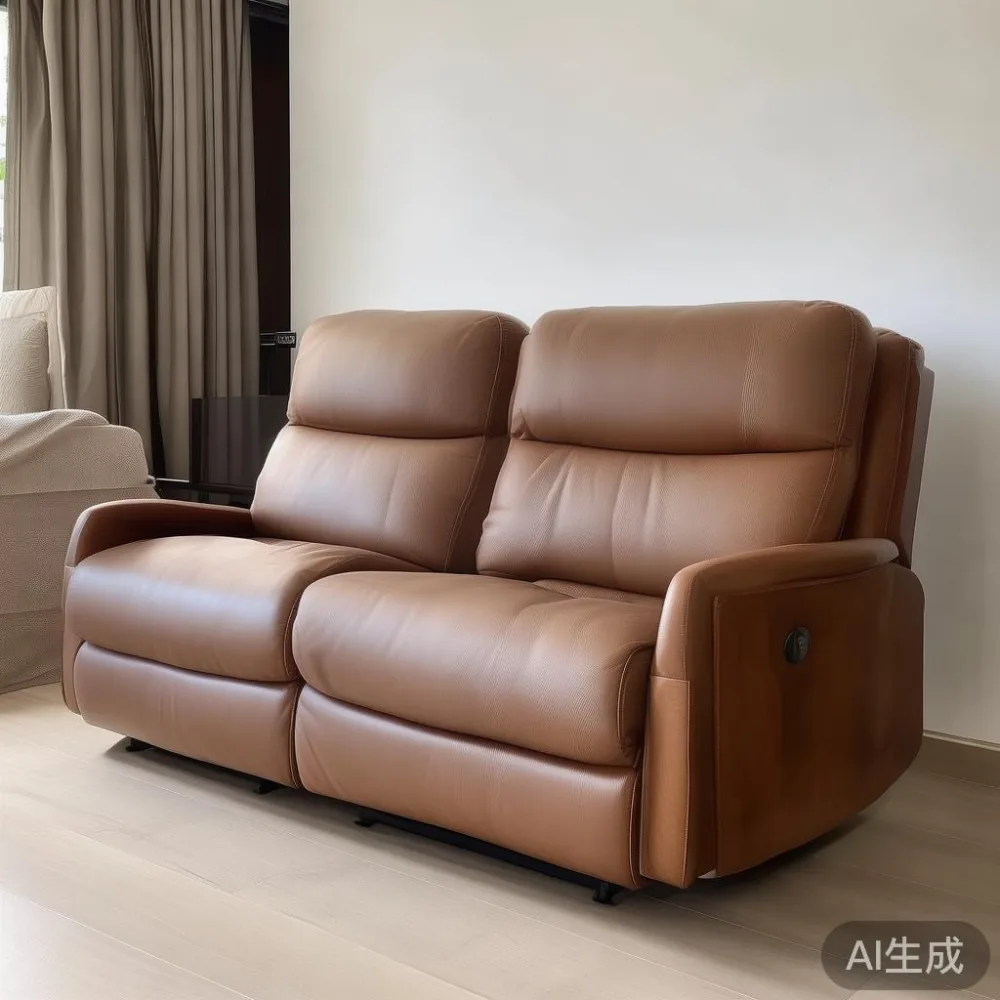
Why the recliner sofa debate matters so much in a Singapore HDB
Singapore households are unusual by global standards. Most families live in 4-room HDB flats of roughly 90 sqm, or 5-room flats of about 110 sqm. The corridor width outside your door is usually 1.2 m to 1.5 m, and older lifts are 2.1 m deep with doors around 0.9 m wide. A recliner sofa that looks fine in a 3,000 sqft American suburban basement behaves very differently when it has to work through a right-angled lift lobby, a tight corridor turn, and a unit door that measures 0.9 m wide. This is why the structural core of the frame matters more in Singapore than in many other markets. A veneer-covered MDF frame can hold up beautifully in a temperature-controlled 22°C condo, but it does not forgive a humid afternoon when the window is open and the monsoon edge creeps into the living room.
You also replace furniture less often here. Moving flats every 7 to 10 years is common, but the big pieces — the dining table, the wardrobe, the recliner sofa — usually travel with the family. A piece that lasts 12 years quietly absorbs its cost; a piece that lasts four years quietly bleeds it.
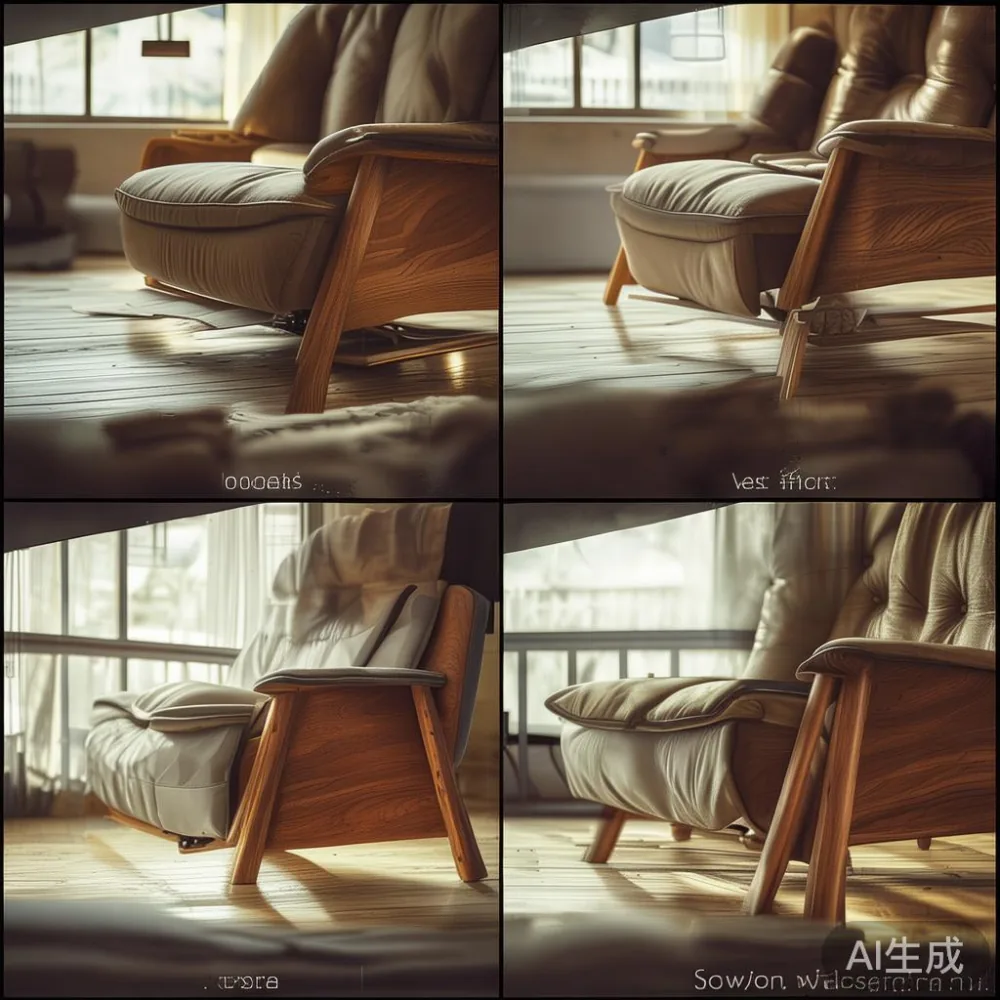
What counts as "solid wood" and what counts as "veneer"
The terms are slippery, especially online. Here is how I separate them, based on what I have seen in factories in Foshan and in showrooms along Tai Seng and Defu Lane 10.
Solid wood furniture uses lumber through the entire structural part. For a bed frame, that means the rails, the slats, and the headboard panels are milled from hardwood such as oak, ash, walnut, or rubberwood. For a dining table, the top is a single plank or glued-up solid boards at least 2 cm thick, with solid wood legs. For a wardrobe, the carcass, the shelves, and the doors use solid wood panels, not hollow boxes.
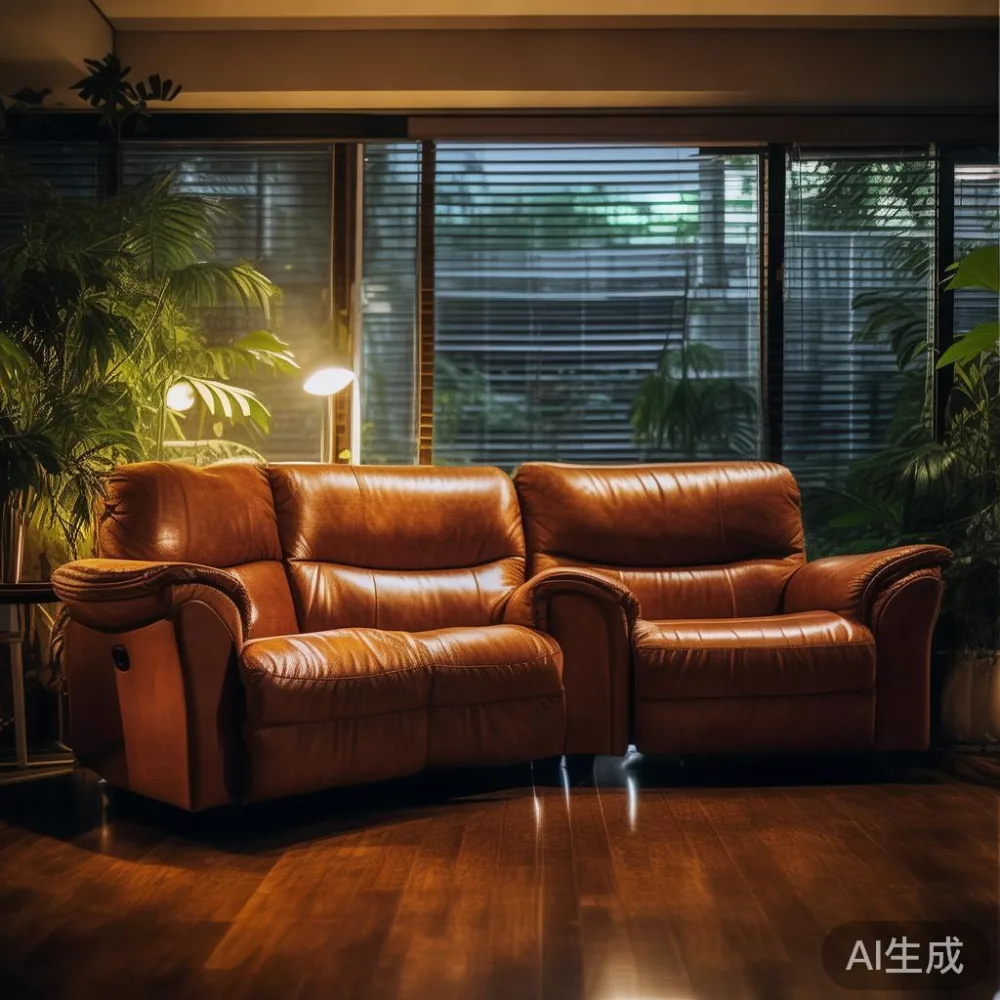
Veneer furniture uses a thin slice of real wood — usually 0.5 mm to 1.5 mm — glued over an MDF, plywood, or particleboard substrate. The substrate does the structural work; the veneer only provides the visual grain. High-end plywood with a thick oak veneer can perform reasonably well for a nightstand or a small side table. Cheap MDF with a paper-thin walnut veneer is what I see fail most often in Singapore homes: the corners swell after a humid season, the veneer bubbles, and the substrate crumbles at the screw points where the hinges attach.
If a sales assistant cannot tell you what the substrate is — usually by saying "MDF core," "plywood core," or "solid throughout" — walk away. That one question separates a S$3,200 recliner sofa from a S$900 lookalike.
The real 5-year numbers, in Singapore dollars
Let us anchor this on a concrete scenario: a Singapore couple in a Punggol 5-room HDB buys a 3-seater recliner sofa for the living room. Both options look similar on Day 1. Here is what I have tracked across two comparable household budgets.
Veneer recliner sofa, mid-range retail. Retail price roughly S$1,200 to S$1,800, including GST at 9%. Sofa dimensions about 210 cm wide x 95 cm deep x 100 cm tall, weight around 65 kg. Delivery S$80 to S$120, depending on lift access and whether staircases are involved. Assembly usually included. Year 2: veneer touch-up kit S$30. Year 3: one armrest de-laminates, in-place repair S$180. Year 4: a second armrest fails, full-frame squeak develops; partial re-upholstery S$350. Year 5: replacement cost S$0 yet, but the sofa has lost about 45% of its retail resale value, and a Pinnacle@Duxton next buyer would not touch it.
5-year total: S$1,490 (mid-price) + S$110 delivery + S$30 + S$180 + S$350 = S$2,160.
Solid wood recliner sofa, well-built, from a Foshan maker like MIDHILL. Retail price roughly S$2,800 to S$3,600, including GST. Dimensions about 215 cm x 98 cm x 102 cm, weight around 95 kg because hardwood is denser than MDF. Delivery S$120 to S$180, sometimes free above S$350. Year 2: a drop of oil on the armrest, wiped clean. Year 3: nothing. Year 4: one minor scratch on a leg, touched with a furniture marker S$12. Year 5: still structurally sound, resale value about 60 to 65% of original price because solid wood ages into a darker, warmer tone that HDB buyers actually prefer.
5-year total: S$3,200 (mid-price) + S$0 free delivery + S$12 = S$3,212.
Gap: S$1,052 over five years. Spread across 60 months, that is S$17.50 a month. Or, if you prefer, roughly the cost of two cai png lunches at a Bedok hawker centre.
Is a Japanese bed worth it for small Singapore bedrooms?
The same logic applies to the bedroom. A Japanese bed — low platform frame, often ash or rubberwood, slatted base — costs around S$1,400 to S$2,200 for a queen. An MDF veneer platform bed retails for S$600 to S$900. Five years in, I have watched three veneer frames in Tampines HDBs develop cracked side rails at the screw points where the slats attach; the particleboard simply cannot hold a cam-lock nut for very long under the cyclic load of sleeping adults. If you are asking is Japanese bed worth it, the most honest answer in a Singapore context is: yes, if you move flats on a 7-year cycle and you want the bed to make the next move intact. Solid wood platform frames lose only minor value because buyers recognise the material. The same applies to the wardrobe: is Japanese wardrobe worth it depends entirely on the carcass construction. A Japanese-style wardrobe with solid paulownia panels and traditional joinery can outlast three HDB moves. A "Japanese style" wardrobe with MDF doors will not survive one.
What about dining tables, nightstands, and marble pieces?
The dining table is the largest single furniture purchase most Singapore families make after the bed and the wardrobe. A 1.8 m marble table with a solid wood base runs S$1,800 to S$3,500. A 1.8 m veneer dining table with marble-look laminate runs S$700 to S$1,200. The marble table is heavy — usually 90 kg to 130 kg — so delivery into a high-floor HDB without a goods lift costs S$200 to S$280. That is fine: heavy means dense, and a marble table with a solid wood base typically outlives two HDB tenancies. A 1.6 m solid wood dining table in oak or ash runs S$1,400 to S$2,400 and weighs 55 kg to 75 kg, which is manageable.
Nightstands are where veneer often makes sense. A bedside table is small, rarely load-bearing, and easy to replace. A S$180 veneer nightstand replaced every 4 years costs S$225 over 16 years (three replacements). A S$420 solid wood nightstand that lasts 16 years costs S$420. Both are reasonable depending on your taste. If you are buying for a child moving into the bedroom next year, the veneer piece is fine. If you are furnishing your forever bedroom, go solid.
For a marble table specifically, ask about the substrate under the marble. Some marble tables use an MDF core beneath a 2 cm marble slab; better ones use a plywood or solid wood core. The core decides whether the corners chip in two years or ten.
Does light-luxury styling change the math?
This is where the article bends back into design, because the question really on people's minds is how the cost decision looks once you factor in style. Light luxury — whether the French light luxury variant, the American light luxury variant, or the post-modern light luxury variant — depends on tactile materials to carry the room. Marble, brushed brass, velvet, and solid wood grain are the cues the eye picks up. Veneer, no matter how skilled the print, tends to read flat in person, and the eye registers it as a photograph rather than a surface.
If you are chasing French light luxury for a condo living room, the recliner sofa is the anchor piece. A solid wood frame can be upholstered in performance velvet in taupe, jade, or oxblood, and the result will read correctly even in a small 95 sqm unit. A veneer frame upholstered the same way reads fine on the showroom floor under Jurong East track lighting, and read mediocre the moment it lands in flat daylight at Punggol.
The same logic applies to the bed. If you have ever searched how to style light luxury bed in room, the answer usually starts with the headboard material and the nightstand height. An upholstered headboard on a solid wood bed frame with two slim brass bedside lamps is the modern Modern light luxury for hotel look translated into an HDB. A headboard on a hollow MDF frame sags within a year and the look collapses.
If the look you want leans more provincial — soft linen, warm walnut, a hint of carved detail — the question becomes how to choose French provincial bed. Pick solid wood for the frame and the headboard posts, accept the extra 25 kg, and budget for a slightly thicker mattress to compensate for the lower bed height. Do not save money by substituting MDF for the decorative carved crown piece; the carving is the entire point, and MDF cannot hold a sharp profile the way rubberwood or ash can.
The Japandi dining room question I keep getting
More than once in the last season, a reader has asked about Japandi for dining room: is a Scandi-Japanese fusion dining set practical in a humid Singapore climate? My answer is yes, with caveats. Use solid ash or oak for the table top and legs, choose a soap finish or a matte hard-wax oil instead of a polyurethane film, and budget for a yearly re-oiling of S$30 to S$50 in materials. The matte finish is what reads "Japandi" — a soft sheen, not a mirror gloss. Do not use a veneer-top dining table in this style. The matte aesthetic is unforgiving; every chip in the print layer becomes obvious, and there is no way to spot-repair a printed finish the way you can re-oil solid wood.
The hidden costs Singapore buyers forget
Three costs rarely appear in the S$1,490 sticker price. First, disposal. When a veneer recliner sofa fails at year four, you cannot donate it to most Singapore charities because the structural frame is unsound. A typical bulk disposal pickup through a Town Council costs S$120 to S$250 depending on your estate (Pasir Ris and Punggol tend to be on the lower end; central estates higher). Second, the replacement cycle. Buying a veneer sofa twice in five years is S$2,980 plus two delivery fees plus two disposals: roughly S$3,400 to S$3,700 net. Third, downtime. A flat without a working sofa for a week while waiting for the replacement is a real inconvenience when you have a young family.
Solid wood builders like MIDHILL offer refinishing options that effectively reset the clock. A S$150 to S$250 sand-and-re-oil in year six turns a tired recliner sofa or a worn dining table back into something close to new. For a bed frame, the same treatment costs S$200 to S$300. The lifetime refinishing is a structural feature, not a marketing line, and it pays for itself the moment you use it once.
So who should buy veneer, and who should buy solid wood?
If you are renting out a Punggol HDB room for two years before selling the flat, buy veneer. The S$900 savings up front are real, and you will not live with the consequences. If you are building out the home you plan to keep for a decade or more, the math over five years is already in favour of solid wood, and over ten years it is not even close. A S$3,200 recliner sofa that lasts 15 years costs S$213 a year. A S$1,490 veneer sofa replaced twice in the same window costs S$700 a year.
A practical shopping list for a Singapore 4-room HDB on a realistic budget:
- Solid wood: recliner sofa (the daily-use anchor), dining table, bed frame, wardrobe carcass, every piece with structural screws.
- Veneer okay: nightstands, side tables, TV console if the TV is not heavy, decorative shelves that hold less than 5 kg each.
- Marble considered: a marble table with a verified solid wood or plywood core is a long-term piece. A marble-look laminate is not worth the trade-off in a humid HDB.
Five years from now, the household that chose solid where it mattered will still have the same recliner sofa, the same dining table, and a clearer conscience. The household that chose veneer for everything will be browsing the next Punggol furniture mall with the same decision in front of them — and the same S$17.50 a month to think about.