Singapore Recliner Sofa: Price Inside Out
A solid wood dining table can cost S$1,280 in one showroom and S$4,600 in another, while both pieces may be described as “solid oak.” The difference usually has less to do with the name on the sales label than with the timber, construction, finish, dimensions, and the business model behind the quoted price. Understanding those variables helps Singapore buyers compare quotations fairly, especially when floor space, lift access, and GST affect the final decision.
MIDHILL makes solid wood furniture and works with international buyers, but a useful price explanation needs to go beyond material names. It needs to connect the factory specification to everyday use in HDB flats and private condos, from the narrow lift serving a Tampines block to the larger corridor outside a Bedok apartment.
This guide breaks down the actual cost drivers behind a solid wood sofa, bed frame, dining table, wardrobe, nightstand, and marble table. It also explains why a recliner sofa may cost more than a fixed sofa with fewer moving parts, and where a light-luxury design can add value without turning every detail into an expensive flourish.
What determines the price of a solid wood dining table?
The starting point is the timber species and grade. Solid oak, ash, beech, walnut, and rubberwood have different raw-material costs, while board selection affects colour consistency and the number of knots or natural marks. Top-grade boards with narrower widths may require more careful cutting and yield, which raises the production cost per finished dining table.
Thickness matters just as much as species. A table with a 20–25 mm solid wood top may use roughly 70–120 kg of timber, depending on its dimensions and whether the construction is solid throughout or assembled from solid components with some internal panels. A 180 cm table for six people may weigh 45–75 kg; a 220 cm table can reach 85–110 kg. Those weights affect labour, packaging, and delivery into an HDB flat.
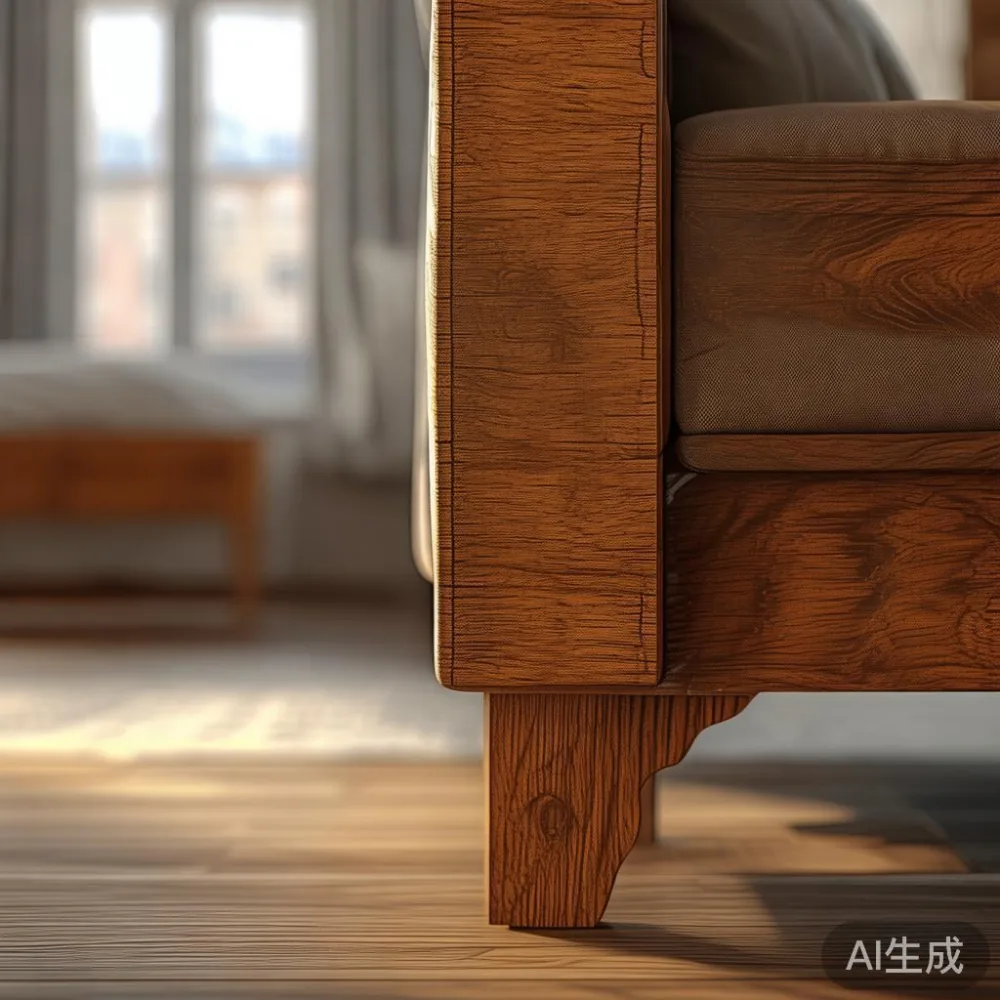
Joinery is another price driver. Mortise-and-tenon joints, dowelled corners, and reinforced aprons can take longer to make and inspect than simple concealed screws. A well-made table should resist movement under daily loads, but “solid wood” alone does not guarantee stable construction. Ask how the joints are anchored, whether the top is solid rather than veneered, and what tolerances are allowed across the surface.
Finishing also carries a real cost. Staining an entire table, filling the grain, sanding through several grits, and applying 3–5 protective coats require time. A clear matte finish may need about 5–7 days of curing before safe use, while a heavily distressed finish can take 10–14 days. French provincial styling often introduces carved edges, shaped legs, and warm layered colours; post-modern light luxury tends to use cleaner profiles with restrained grain contrast.
For a Singapore home, the practical question is how the table enters the building. A lift with an internal depth of 110 cm and a door width of 90 cm may reject a table top wider than 88–90 cm even if the lift itself is large enough. A dining table ordered in two sections can make transport easier. Allow 7–14 delivery days for a made-to-order Singapore order, plus another 1–3 days for installation and packaging removal.
Is a solid wood sofa worth more than a fabric or veneer sofa?
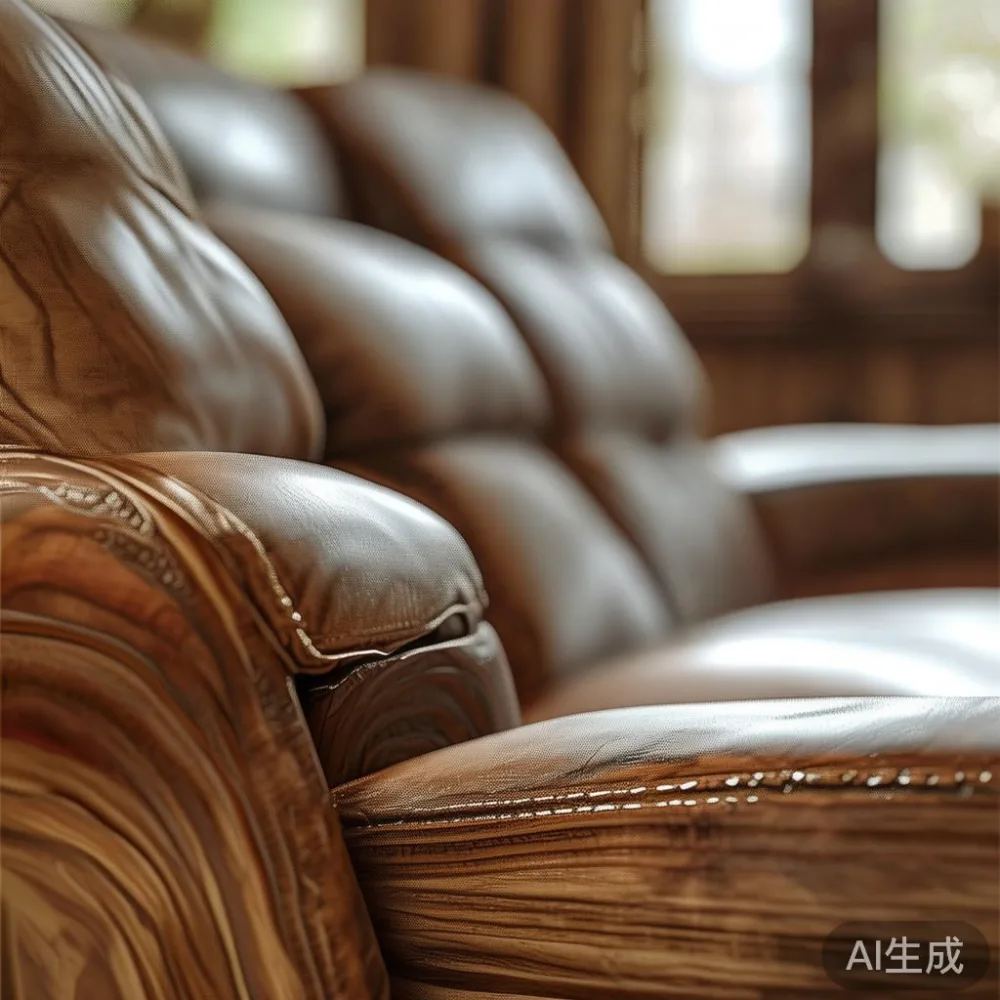
A solid wood sofa can be worth the premium when its frame remains structurally sound for years, but timber alone does not determine comfort. The price may include a kiln-dried hardwood frame, layered webbing, foam with a specified density, fibre wrapping, and a properly finished mechanism. It should not mean that the seat cushions are solid wood simply because the visible frame is.
Upholstery adds another layer of cost. Performance fabric may cost S$18–S$45 per metre, while a textured weave with special treatment can cost S$50–S$90 per metre. A three-seat sofa uses roughly 12–18 metres of fabric, excluding pattern matching and waste. Full-grain leather can raise the material cost several times over, especially for a large surface that contains natural colour and pore variation.
Foam specifications are more informative than vague claims such as “premium filling.” A seat cushion built around high-density foam at about 35–45 kg/m³ may offer firmer support; a softer 28–32 kg/m³ foam can feel more relaxed but may compress sooner. Test the sofa for at least 10 minutes, sit near the front edge, and check whether the back support is angled or nearly upright.
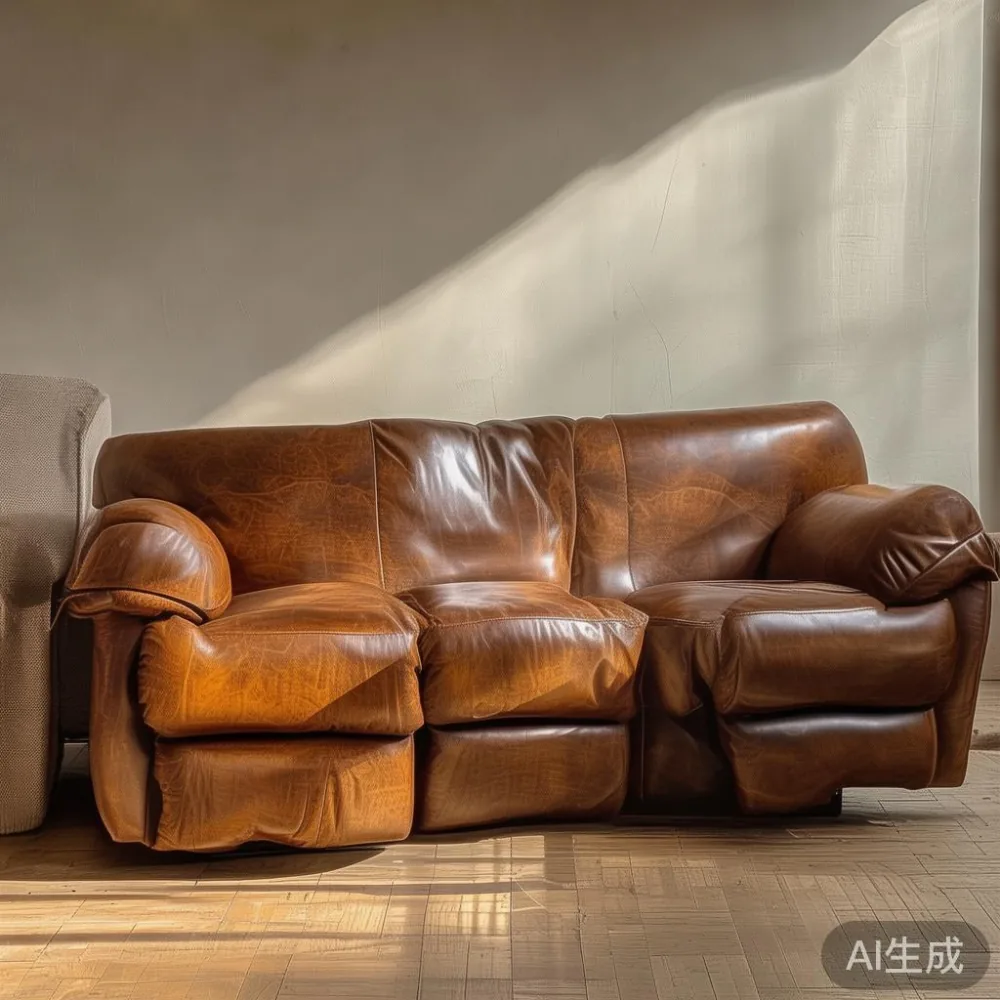
The size of the piece changes the quote as well. A two-seat sofa around 160–180 cm wide may cost S$1,600–S$3,200, while a three-seat model around 200–230 cm may range from S$2,400–S$4,800. A recliner sofa commonly costs S$1,900–S$4,200 because it includes a powered or manual motion mechanism, articulated backrest, footrest, and reinforced frame. Some manual recliner sofa designs still use 3 moving joints, so the mechanism may account for S$450–S$1,100 of the total.
That is why a price comparison should separate frame, mechanism, cushioning, textile, and labour. Two recliner sofa options can look similar while using different steel grades, actuator systems, foam densities, and timber sections. In an HDB living room, the sofa should also leave at least 60–75 cm of clear circulation space between the front edge and a coffee table. The catalogue width is less useful than the footprint with the recliner extended.
What makes a solid wood bed frame cost more?
A bed frame’s price is driven by the size, timber section, slat system, headboard design, and surface treatment. A basic 90 cm single frame may cost S$480–S$950, a 135 cm double frame S$780–S$1,600, and a 160 cm queen frame S$1,050–S$2,300. A king frame with thicker posts, a shaped headboard, and matching side tables can exceed S$2,500.
The load path matters more than decorative carving. Centre rails, support legs, and slat spacing determine whether the frame sags under a person or a couple. Solid slats at roughly 5–8 cm intervals can provide stronger support than wider spacing, but the complete system must be designed as a unit. A centre support leg may add little visually while improving stability across a 190–210 cm mattress.
For buyers researching the best Modern bed for 2026, the focus should be on proportion rather than a fashionable trend. Clean lines, integrated side rails, and a low profile suit many condo bedrooms, while French provincial beds bring deeper shaping and more ornamental detailing. If you are wondering how to style French provincial bed in room, keep the bed visually lighter with plain bedding, 2–3 cushions, one narrow throw, and simple curtains rather than adding another heavily carved object.
Access affects installation charges. A queen bed frame can weigh 45–85 kg and may arrive in 2–4 cartons. An HDB staircase without a working lift may add S$80–S$180 in labour, while a condo requiring a service lift booking may add a separate handling fee. Confirm the lift dimensions and turning space before delivery; a 160 cm mattress is easier to manage than a fully assembled king frame with long side rails.
How much should a wardrobe, nightstand, or marble table cost?
A wardrobe combines timber, hardware, internal fittings, and a considerable amount of labour. The height, width, depth, sliding or hinged doors, hanging space, shelves, drawers, and mirror options all influence the price. A 120 cm two-door wardrobe may cost S$900–S$2,000; a 180–240 cm fitted wardrobe with drawers and internal lighting may range from S$2,200–S$6,500.
Hardware is not a trivial line item. Soft-close hinges, full-extension runners, and durable drawer boxes contribute to daily performance. European light luxury nightstand designs often use slender tapered legs and restrained storage, so a S$320–S$680 nightstand may be reasonable when the timber is specified, the drawer moves smoothly, and the finish is even. A similar appearance with chipboard panels and basic hinges may cost only S$160–S$280 but offer different longevity.
A marble table brings in the price of the slab. A 100–120 cm rectangular table can use one marble or stone slab, while a larger dining table may use several joined sections. Veining, thickness, cut, reinforcement, and fabrication determine the cost. Expect S$1,400–S$4,500 for a moderate-size marble dining table, with heavier slabs and elaborate bases at the upper end. A European light luxury TV console in marble or marble-effect construction may range from S$1,500–S$4,200, largely because of weight, edge detailing, and protected delivery.
Product terms can obscure the comparison. “Marble” may describe natural stone, while “marble-effect” may refer to porcelain or printed composite. Ask for the exact material and edge treatment. Stone tables may weigh 80–180 kg, requiring at least 2–4 people and proper lifting equipment. The delivery quote should include carrying it beyond the lift if the corridor is narrow.
Is light luxury an extra charge or a design approach?
Light luxury is more accurately understood as a design approach than a fixed material package. French light luxury often blends curved profiles, warm timber, soft textiles, and decorative moulding. American light luxury tends toward generous proportions, upholstered surfaces, layered cushions, and substantial furniture silhouettes. Post-modern light luxury can combine cleaner geometry with a few recognisable historical references.
The premium comes from proportion, detail, and finish consistency. A sofa may have more finely matched grain, hand-finished edges, and higher-grade upholstery. A bed frame may use shaped rails and carefully softened corners rather than basic square sections. A dining table may use book-matched timber and a longer curing cycle. These choices cost money, but they should improve the room rather than simply create a more complicated product.
One real experience made this clear. Last month I visited a Singapore apartment where a recliner sofa had a substantial timber frame but visibly uneven joints. Its catalogue price was S$2,980. A slightly smaller model at S$2,640 had a more consistent frame, denser seat foam, and a smoother two-position mechanism. The less expensive unit was the better purchase. I tested both by sitting, reclining, and checking the gaps; the visual bulk of the first model did not match its build quality.
For price comparisons, ask for a specification sheet that states timber species, board dimensions, joinery, finish coats, cushion density, mechanism type, and warranty. A seller unable to answer those questions may still offer attractive furniture, but the buyer is buying on presentation rather than measurable detail.
How do delivery, GST, and Singapore access affect the final price?
Singapore prices normally include GST, but the displayed figure may be a product-only rate. Confirm whether the quoted amount includes delivery, assembly, lift booking, and removal of packaging. A HDB delivery can involve a truck booking, parking coordination, carrying to the block, and carrying from the lift lobby to the door. These are real operating costs, particularly for a wardrobe or a 70 kg dining table.
Measure the route before ordering. Check the lift door, internal cabin width and depth, corridor turns, and the narrowest landing. For example, a 200 cm long sofa may fit through a 210 cm corridor but still fail to turn at a right-angle corner. A sectional approach or removable legs can reduce this risk. Allow 5–10 working days for standard in-stock furniture and 14–30 days for made-to-order pieces; hand-finished or specially sized models may require more time.
Warranty terms also have economic value. MIDHILL provides a 10-year structural warranty and lifetime refinishing on eligible furniture, with free shipping above US$350 for qualifying international orders and 14-day returns under the stated policy. Local Singapore delivery, however, should be confirmed in writing because international freight terms do not automatically set the exact service charge for every condo or HDB block.
What should you compare before paying for solid wood furniture?
Compare like with like using a written specification. For the solid wood sofa, ask whether the visible timber is solid, then check the seat density, frame joints, and fabric composition. For a recliner sofa, test every position and look for loose joints or uneven gaps. For the bed frame, inspect the centre support, slat spacing, and clearances around the mattress. For the dining table, check top thickness, underside bracing, and whether it is delivered in manageable sections.
Then add the room-specific costs. A narrower piece may cost less to manufacture but can be more expensive to deliver if it must be dismantled or carried up many stairs. A wider table may command more but suit a condo dining zone better. For a wardrobe, interior fittings usually matter more than ornate doors. For a nightstand, drawer hardware and stability matter more than the number of decorative mouldings. For a marble table, confirm the slab weight and access route.
Look for value across a 10-year ownership period rather than judging only by the invoice. A bed frame that stays stable, a dining table that can be refinished, and a sofa whose mechanism can be serviced may justify a higher initial price than a disposable alternative. Solid wood furniture is not uniformly expensive; it is priced according to measurable inputs. Once timber, construction, comfort, finish, logistics, and warranty are separated, the quotation becomes much easier to understand.