Recliner Sofa Singapore: My Hands-On Buying Notes After Sitting On Way Too Many
Real recliner sofa buying notes for Singapore homes: HDB door sizes, condo lifts, leather vs fabric, and the one measurement I wish I had taken first.
- What Is a Recliner Sofa, Exactly, and Is It the Same as a Motorised Sofa?
- Which Recliner Sofa Type Actually Fits a Singapore Home?
- How Do You Measure Your HDB or Condo Before a Recliner Sofa Arrives?
- What Frame and Mechanism Should You Actually Look For?
- Leather vs Fabric vs Air Leather: What Survives Singapore Best?
- Does Humidity in Singapore Ruin a Recliner Sofa?
- How Much Should You Budget for a Decent Recliner Sofa in Singapore?
- Where Should You Buy a Recliner Sofa in Singapore?
- How Do You Maintain a Recliner Sofa So It Lasts a Decade?
What Is a Recliner Sofa, Exactly, and Is It the Same as a Motorised Sofa?
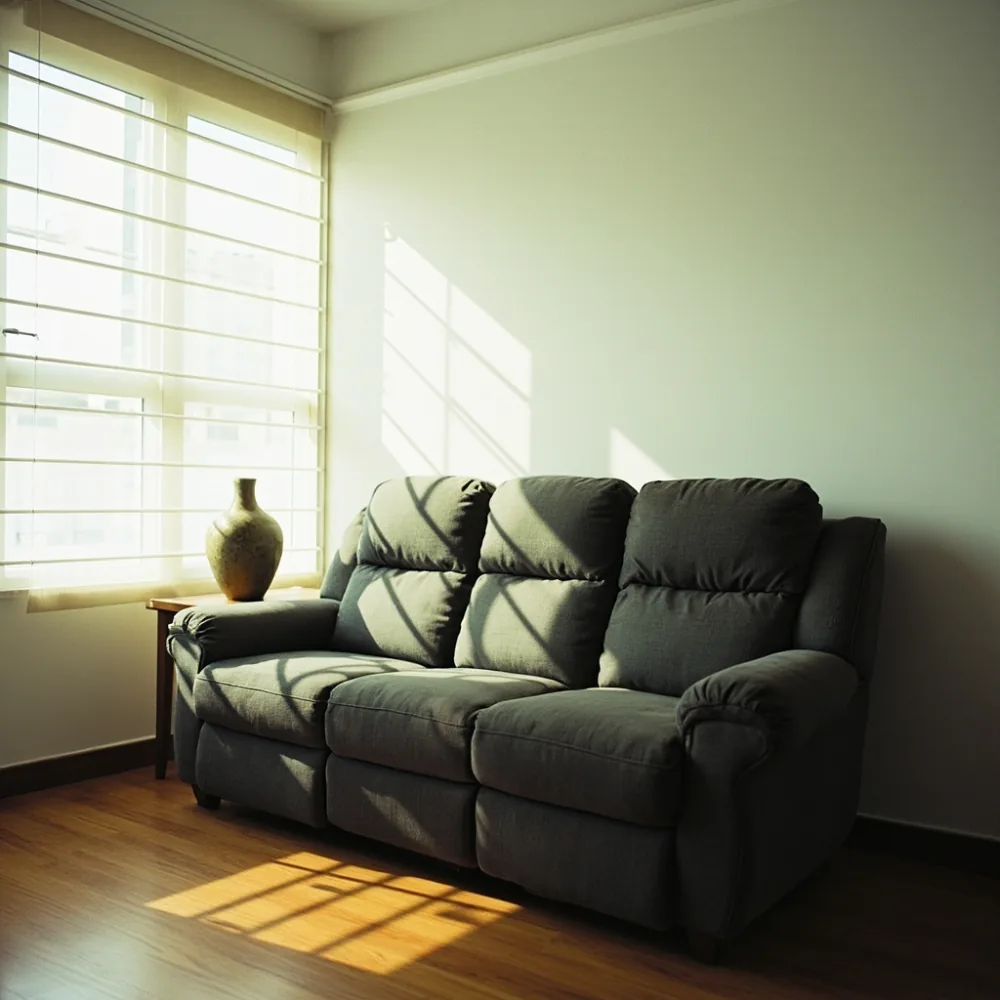
When I started shopping for a recliner sofa Singapore wide, I quickly realised the term gets thrown around loosely. A traditional recliner is the kind your dad had in the 90s: a stiff lever on the side, you pull it, the footrest pops up, the back tilts back. Simple, mechanical, almost indestructible.
A motorised recliner sofa swaps that lever for an electric motor (usually one per seat, sometimes two in higher-end pieces) that pushes you back smoothly. Some go further: power headrests, power lumbar, USB ports, memory positions. The mechanical version is cheaper and lighter; the motorised version is heavier, needs a power point nearby, and costs more.
There's also a third category that confused me for weeks: the manual push-back recliner. No lever, no motor. You just lean back and your body weight does the work. It looks sleek because there are no handles, but it tends to need more clearance behind it than a normal seat.
For Singapore homes, the mechanical recliner is honestly underrated. It's lighter to carry up HDB staircases, has no electronics to fail in our humidity, and the price-to-comfort ratio is hard to beat. But if you have elderly parents who struggle with levers, motorised is worth the extra spend.
Which Recliner Sofa Type Actually Fits a Singapore Home?
I went to three showrooms around Tai Seng, One Tatong, and the Bukit Timah cluster before I understood the real layout choices. Here's the honest breakdown.
- Single recliner armchair: The classic. About 90-100cm wide, 95-105cm deep when reclined. Perfect for the small space furniture problem in a 3-room HDB living room if you only need one seat.
- 2-seater recliner loveseat: Usually 150-170cm wide. Both seats recline independently. My favourite format for couples.
- 3-seater recliner sofa: 200-230cm wide. Often only the two end seats recline, with a fixed middle seat. Make sure you ask, because some cheaper 3-seaters recline all three seats and the footrests clash.
- Recliner sectional / L-shape: Usually one recliner seat at each end of an L-shape. 240-300cm on the long side. Great for condo living rooms above 25 sqm.
- Theatre / wall-hugger recliner: Designed to recline within 10-15cm of a wall. Critical for HDBs where the sofa sits 20cm off the plaster.
The wall-hugger is the bit I missed on my first purchase. A standard recliner needs 25-35cm of clearance behind it to fully recline. My old BTO had the TV wall at exactly 30cm from the sofa back. The footrest hit the wall every single time.
How Do You Measure Your HDB or Condo Before a Recliner Sofa Arrives?
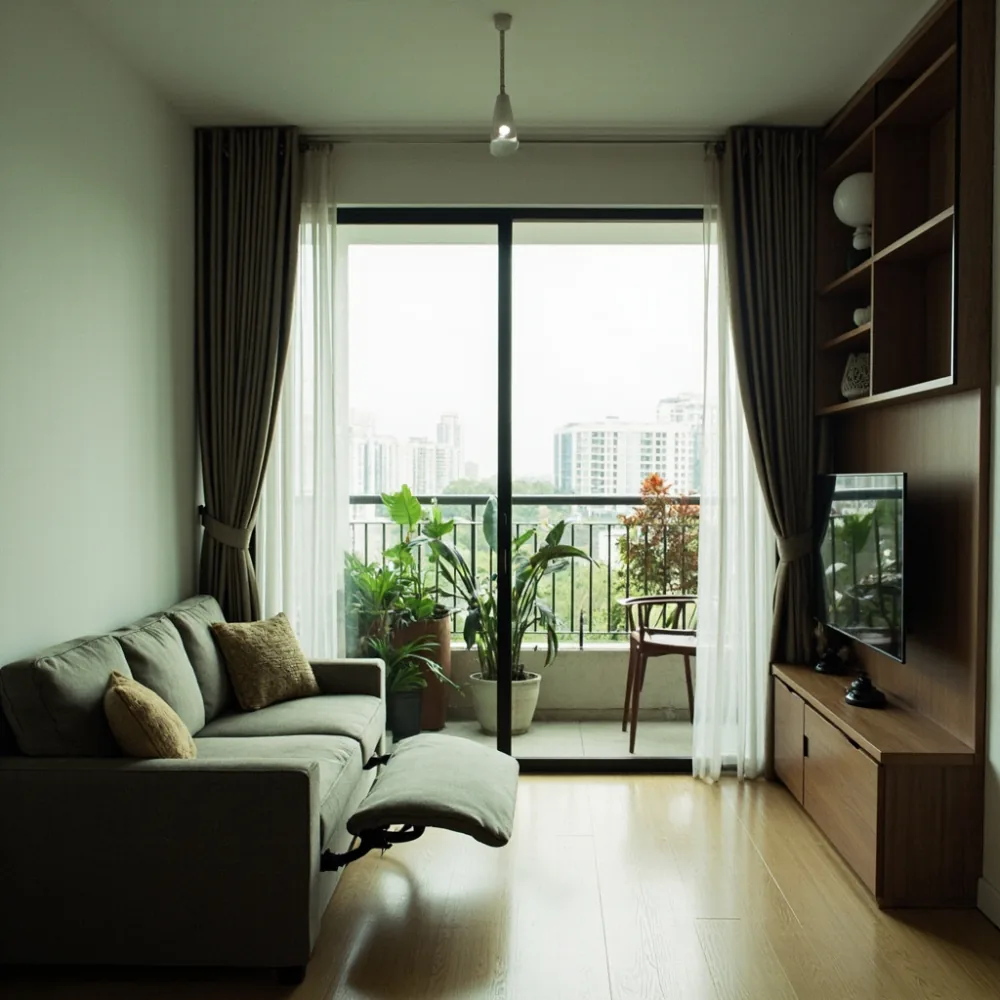
This is the section I wish someone had pushed into my hands before I bought my first one. Grab a tape, a piece of A4 paper, and 15 minutes.
- Measure the door. HDB main doors are typically 90-95cm wide and 210cm tall. Condo doors vary wildly. The sofa has to physically come through, in the box or assembled. Measure diagonally if you have a tight turn.
- Measure the lift. Older HDB blocks have lifts around 110cm deep and 130cm wide with a 80cm door. A recliner sofa in a flat-pack box might still not fit. Newer BTOs are usually better.
- Measure the staircase if it's a walk-up. I've seen a delivery team carry a 90kg recliner up four flights. Not pretty.
- Measure the wall-to-wall space where the sofa will sit. Then subtract 30cm for a standard recliner or 10-15cm if it's a wall-hugger.
- Measure the corridor turns from lift to door. The single most common delivery fail in Singapore is a sofa that clears the lift but wedges in the corridor.
I now photograph every doorway, lift, and turn before I order anything over 50kg. It saves arguments on delivery day.
What Frame and Mechanism Should You Actually Look For?
Frame is the part nobody photographs on Instagram. Open the storage flap, peek under the dust cover, and look at the wood. Here's what separates a durable furniture piece from a five-year fling.
| Frame material | Typical lifespan | Weight feel | Price tier (SGD) |
|---|---|---|---|
| Solid hardwood (oak, ash, beech) | 15-20+ years | Heavy, 80-110kg for a 3-seater | S$2,800 - S$6,000 |
| Plywood with hardwood laminate | 8-12 years | Medium, 60-80kg | S$1,800 - S$3,500 |
| Engineered wood / MDF | 4-7 years | Light, 40-55kg | S$900 - S$1,800 |
| Metal frame (rare in recliners) | 15+ years | Very heavy, 90-120kg | S$3,500+ |
For Singapore's humidity, kiln-dried hardwood is the safest bet. MDF swells if the aircon fails and the place sits damp for a week. Plywood is a reasonable compromise. Solid wood furniture built by a Foshan workshop with proper kiln-drying, like MIDHILL, will outlast anything in this list if the warranty holds.
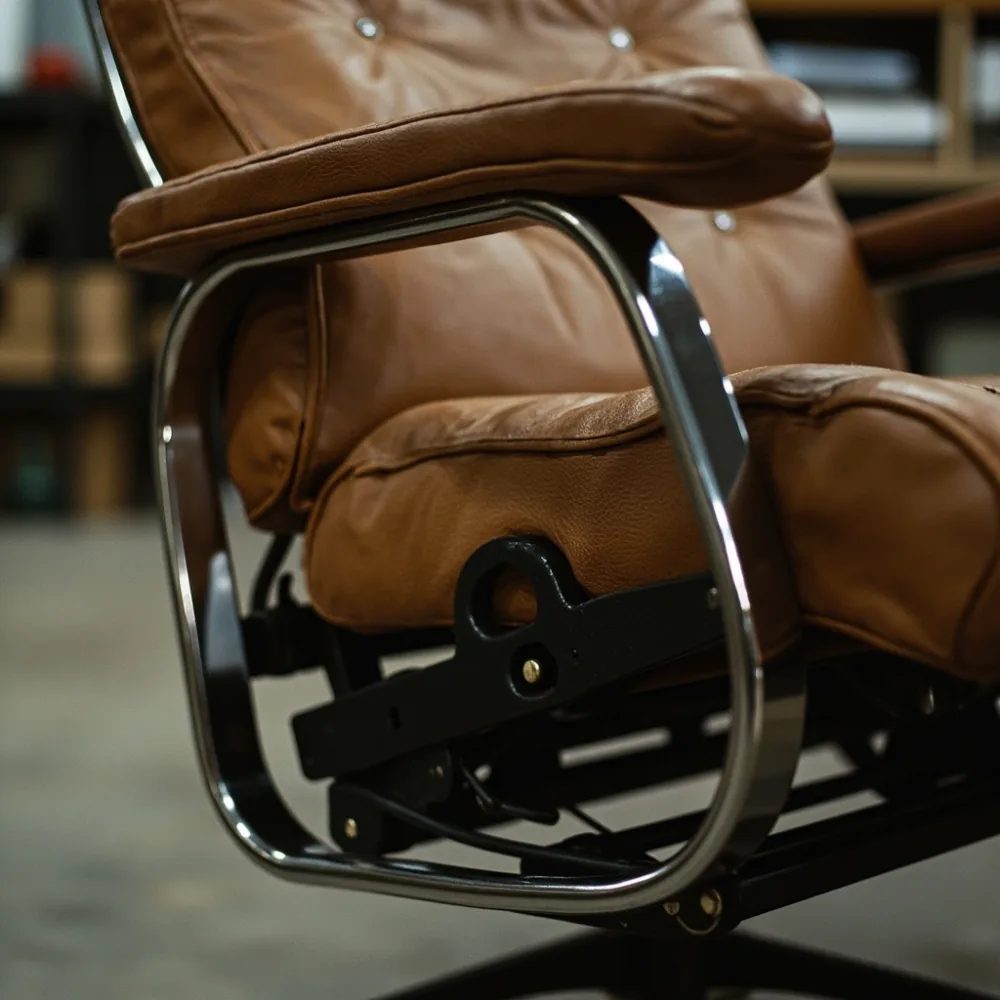
The reclining mechanism itself is usually steel. Look for stamped steel, not cast. Stamped steel mechanisms carry a 5-10 year warranty from most serious makers. Anything with a 1-year mechanism warranty is a red flag.
Leather vs Fabric vs Air Leather: What Survives Singapore Best?
I have owned all three. Here's my honest ranking for our climate.
Full-grain or top-grain leather: The best for durability but needs commitment. Real leather sofa upholstery lasts 12-20 years if you condition it every 6-9 months. In Singapore, the aircon dries it out faster than in temperate climates, so condition more often. Avoid "bonded leather" – it's leather dust glued to fabric, peels within 3 years.
Fabric (linen, cotton blend, performance weave): Breathable in our heat, which is a real plus. Modern performance fabrics from brands like Crypton or Aquaclean resist the kopi spills and Milo stains that come with kids. Lifespan 7-12 years. Downside: pet hair magnets.
Air leather / faux leather / PU: The cheapest option and the most common on Taobao and Shopee listings. It feels great on day one. It peels and cracks within 2-4 years in Singapore humidity, faster if your sofa sits near a window. I would only buy this for a guest room or a 1-year rental.
For our climate specifically, my current pick is a high-grade fabric recliner or a bonded-top-grain leather (real leather on the seats, PU on the sides and back). It's the build most big Singapore furniture retailers quietly sell as "leather sofa."
Does Humidity in Singapore Ruin a Recliner Sofa?
Short answer: yes, eventually, if you ignore it. Long answer: with a few habits, a recliner can live happily in a HDB for 15 years.
- Run the aircon or a dehumidifier at least 8 hours a day. Target 55-65% relative humidity.
- Keep the sofa 30cm away from any external wall. Condensation forms there first.
- Never place it in direct line of an aircon vent. The cold dry stream cracks leather and warps plywood over time.
- Vacuum under and behind the sofa every 2 weeks. Dust holds moisture.
- Open windows during dry afternoons, close them when it rains. Old-school but effective.
The motor in a motorised recliner is the most humidity-vulnerable part. Unplug it during a deep clean, and never let it sit while you air out the house during a thunderstorm. One spike to 95% humidity won't kill it, but weeks of it will corrode the wiring.
How Much Should You Budget for a Decent Recliner Sofa in Singapore?
Prices have moved around in the last two years. Here's what I see in 2024-2025 across the main retail tiers.
| Entry (SGD) | Mid-range (SGD) | Premium (SGD) | |
|---|---|---|---|
| Manual recliner (2-seater) | 900 | 1,800 | 3,200 |
| Motorised recliner (2-seater) | 1,800 | 3,200 | 5,500 |
| Manual 3-seater | 1,400 | 2,800 | 4,800 |
| Motorised 3-seater | 2,800 | 4,800 | 8,500 |
| Custom-built L-shape sectional | 3,500 | 6,500 | 12,000+ |
Delivery in Singapore typically runs S$80-S$200 depending on district and floor. Assembly is usually included. Disposal of your old sofa is another S$80-S$150 if the retailer offers it. Don't skip this – a 90kg sofa left at the void deck is a fine waiting to happen.
Lead times: ready-stock items 1-2 weeks. Custom fabric or custom furniture orders from a Foshan workshop typically 6-8 weeks, plus 2-4 weeks shipping. Plan for 10-12 weeks if you want a specific leather or size.
Where Should You Buy a Recliner Sofa in Singapore?
After two purchases and one painful return, here's how I tier the channels.
- Local showrooms (Tai Seng, One Tatong, Bukit Timah, IMM): Sit on it first. Take photos of the mechanism. Get same-week delivery. Slightly higher prices, but the after-sales is in SGD and in person. Best for first-time buyers.
- Direct-from-Foshan workshops (white-glove importers): Better build quality per dollar, longer warranties, but you can't sit on the exact sofa before paying. MIDHILL fits here: an established Foshan solid-wood maker shipping custom furniture into Singapore with a 10-year structural warranty. Worth considering if you have 8-10 weeks and you want something specific.
- Taobao agents and Shopee/Lazada listings: Cheapest by 30-50%. Highest failure rate. Mechanism and leather quality varies wildly. Fine for a rental you leave in 2 years. Not fine for a home you plan to stay in.
- Second-hand on Carousell or Facebook groups: Genuine bargains if you know what to look for. Massage chairs and single recliners get dumped after 2-3 years by people who never used them.
My rule: anything over S$2,000, buy local or through a direct importer with a real warranty. Anything under, take the gamble on the cheaper channels.
How Do You Maintain a Recliner Sofa So It Lasts a Decade?
A 10-minute routine every month will double the lifespan. I do this on a Sunday morning while the coffee brews.
- Wipe leather with a damp microfiber cloth, then a dry one. Condition with a leather balm every 6 months.
- Vacuum fabric weekly. Use the upholstery attachment, not the beater bar, which frays stitching.
- Lubricate the recliner mechanism once a year with a silicone spray. Don't use WD-40 – it strips the factory grease.
- Check the power cord on motorised models for cracks. Singapore's heat ages rubber fast.
- Rotate the seats if the sofa is in direct sunlight. Uneven fading is the most visible wear.
- Keep pets off if you can. Claws and recliner springs are not friends.
If the mechanism starts squeaking, lubricate it before assuming it's broken. Nine out of ten squeaks are dry metal, not worn metal.
Frequently asked questions
How long does delivery take for a recliner sofa in Singapore?
Ready-stock sofas usually arrive in 1-2 weeks. Custom orders from Foshan workshops take 8-12 weeks including sea freight. Delivery within Singapore itself is same-day or next-day once the sofa lands in the local warehouse. Weekend slots fill up fast in districts 9, 10, and 11.
Can a recliner sofa fit through an HDB door?
Standard HDB main doors are 90-95cm wide and 210cm tall. Most 2-seater recliners in flat-pack boxes fit through. A 3-seater assembled will not. Either buy flat-pack and assemble inside, or confirm the sofa width with the retailer before paying. Measure the lift too, especially in older blocks.
Is a recliner sofa good for back pain?
Motorised recliners with adjustable lumbar and headrest support are genuinely helpful for lower back issues. Manual and push-back recliners are also fine because the reclined position redistributes weight off the lumbar spine. Avoid very soft, deeply cushioned recliners if you have specific back problems – they offer no support.
What is the best fabric for a recliner sofa in Singapore?
Performance weaves like Crypton, Aquaclean, or high-grade polyester blends resist humidity, stains, and fading best. Top-grain leather is also excellent if you condition it every 6 months. Avoid PU, bonded leather, and untreated cotton in our climate – they degrade fast.
How much electricity does a motorised recliner use?
Very little. A single motorised seat uses about 50-70W while reclining, similar to a light bulb. Daily use costs roughly S$0.50-S$1 per month in Singapore. The standby draw is negligible. Leaving it plugged in 24/7 is fine for modern units.
Questions about sizing, fabric or delivery?
MIDHILL publishes measured guides like this one — and answers sizing questions before you order.
See the collection